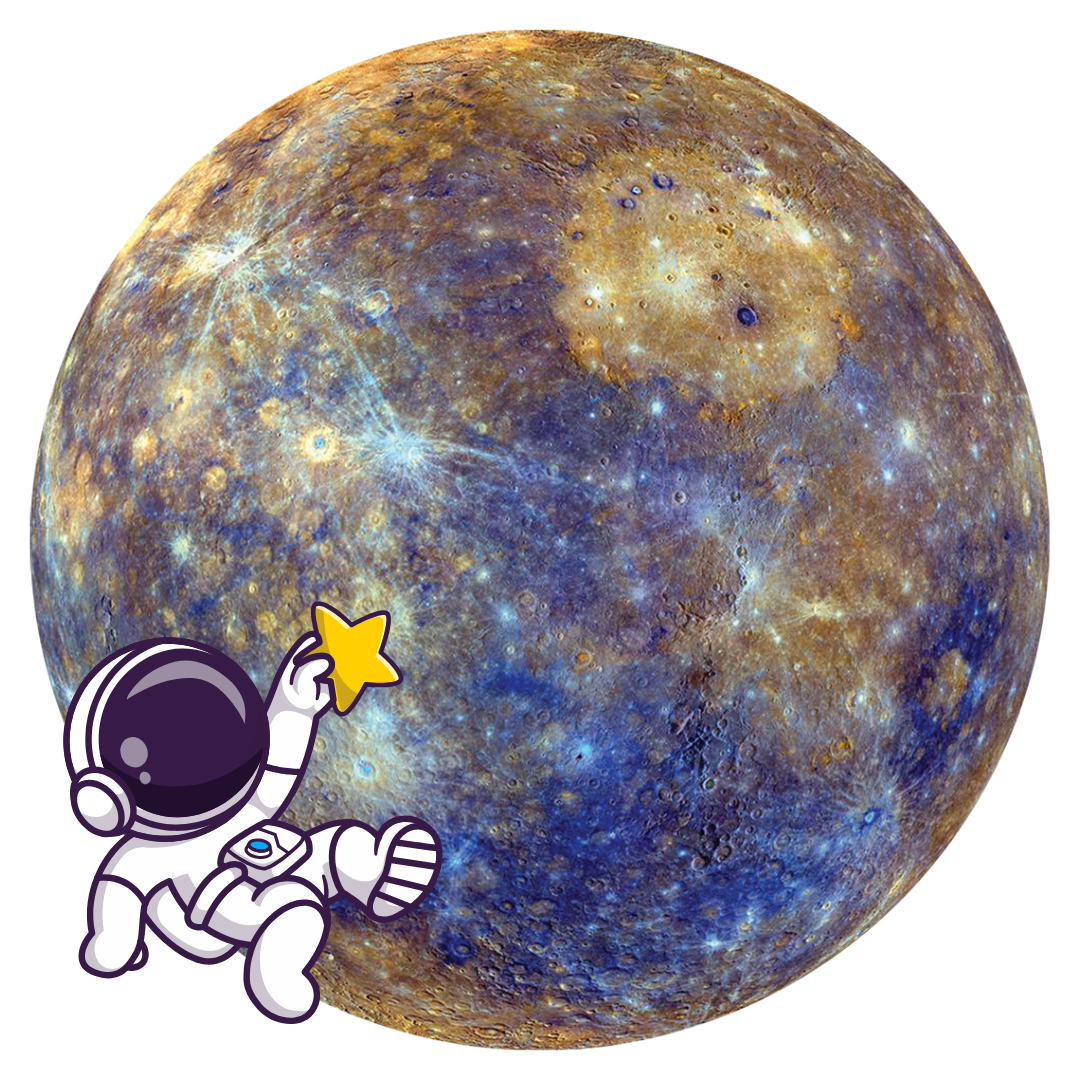
Mercury - The Swift Planet
The Space Explorers
Mercury Mission Headquarters
Welcome, Explorer.
Mercury may be the smallest planet in our Solar System, but it is a world of enormous extremes. It has scorching days, freezing nights, a giant iron core, an unusually long solar day, and a surface covered with ancient craters.
Follow the mission map to meet Mercury, investigate its extreme conditions, explore the spacecraft that have studied it, compare Mercury with Earth, and test what you discover through games and challenges.
Mercury Mission Map
Select a mission to begin exploring Mercury.
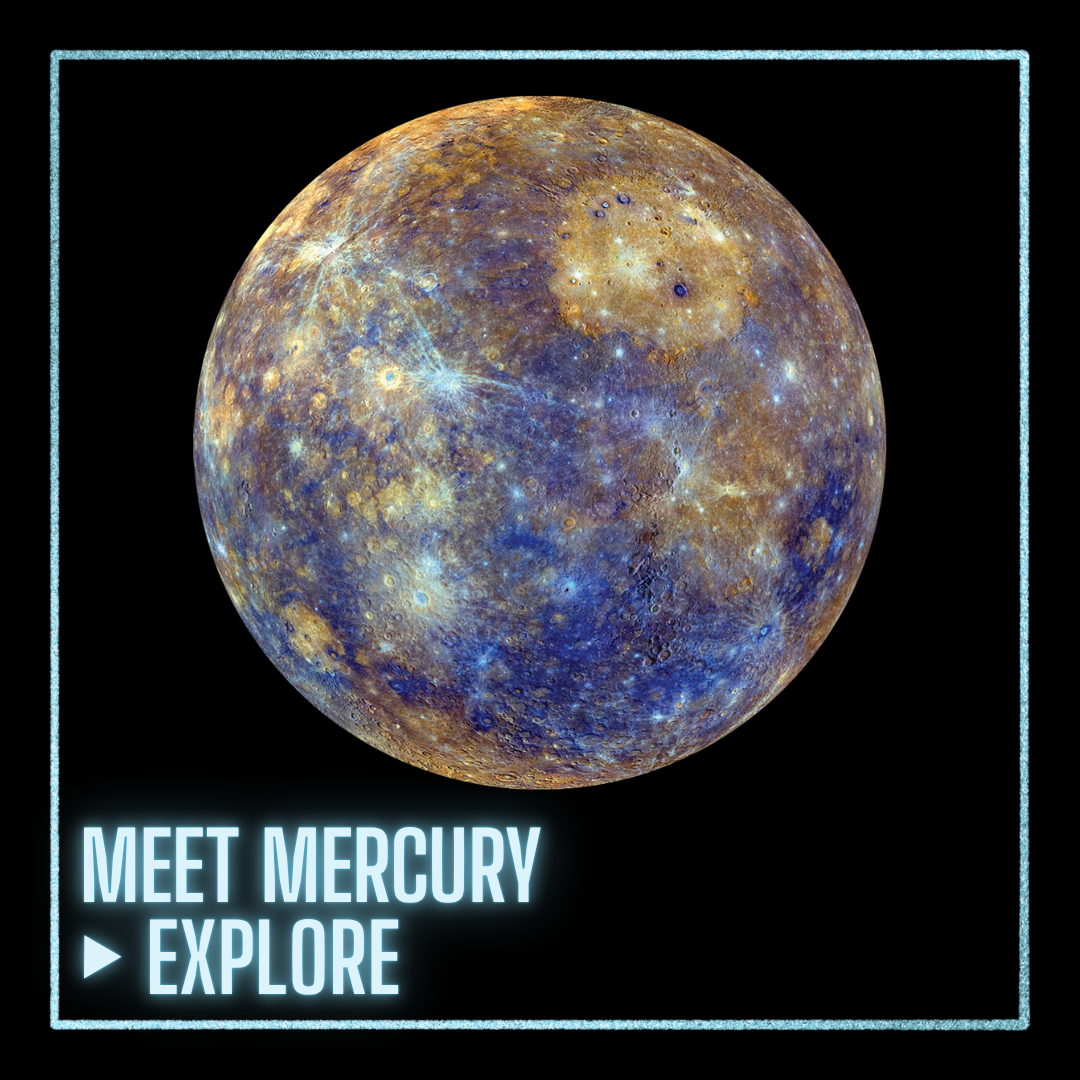
Meet Mercury
Discover the smallest planet in our Solar System.
Mercury is the closest planet to the Sun, but it isn't the hottest. This rocky world is covered with ancient craters, has a gigantic iron core, and experiences some of the most extreme temperatures in our Solar System.
🌟 Why It Matters
Studying Mercury helps scientists understand how rocky planets formed, why some planets have magnetic fields, and what our Solar System looked like billions of years ago.
🚀 Explorer Challenge
Watch the video below. Can you discover three surprising facts about Mercury before it ends?
Explore the Planet of Extremes
See what makes Mercury so interesting.
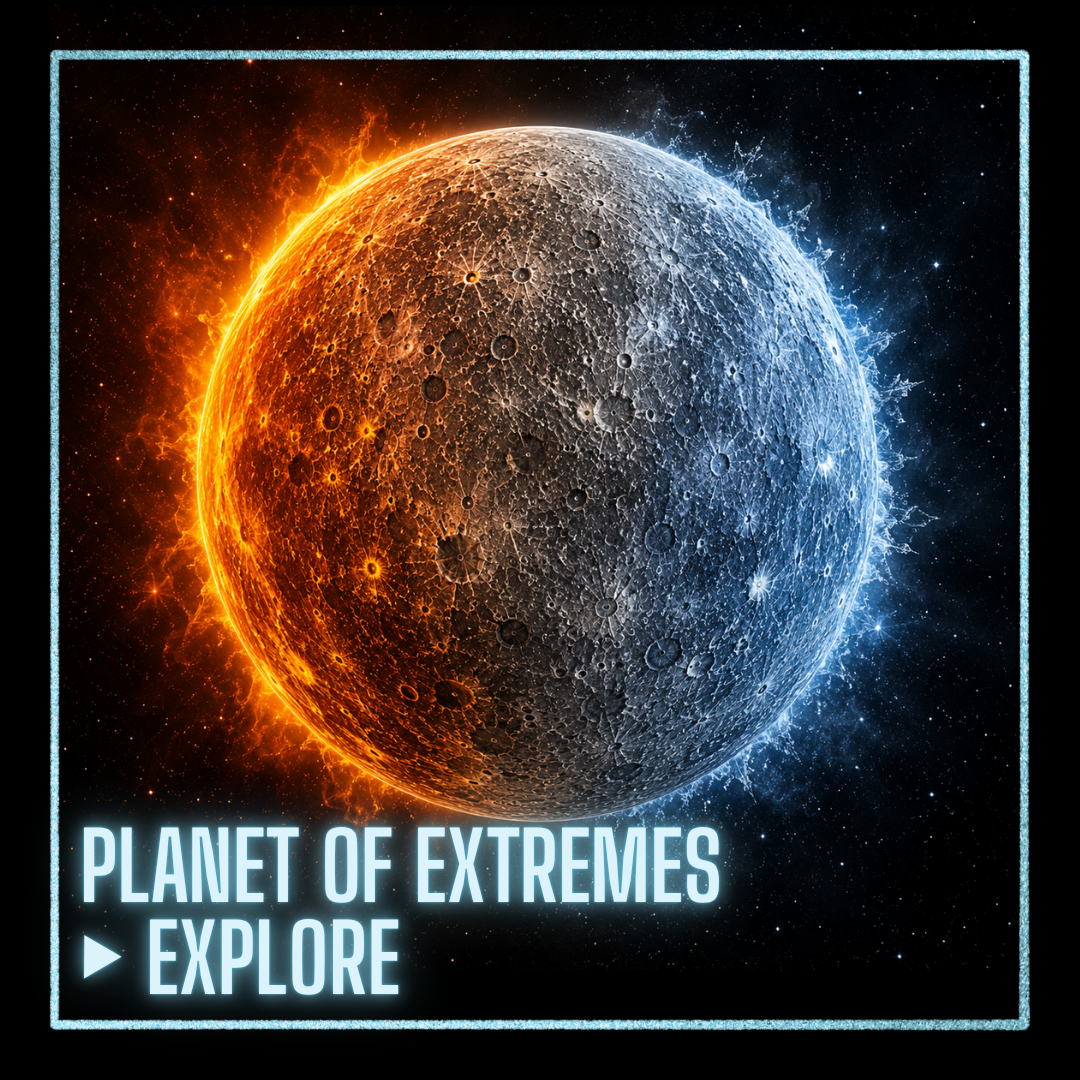
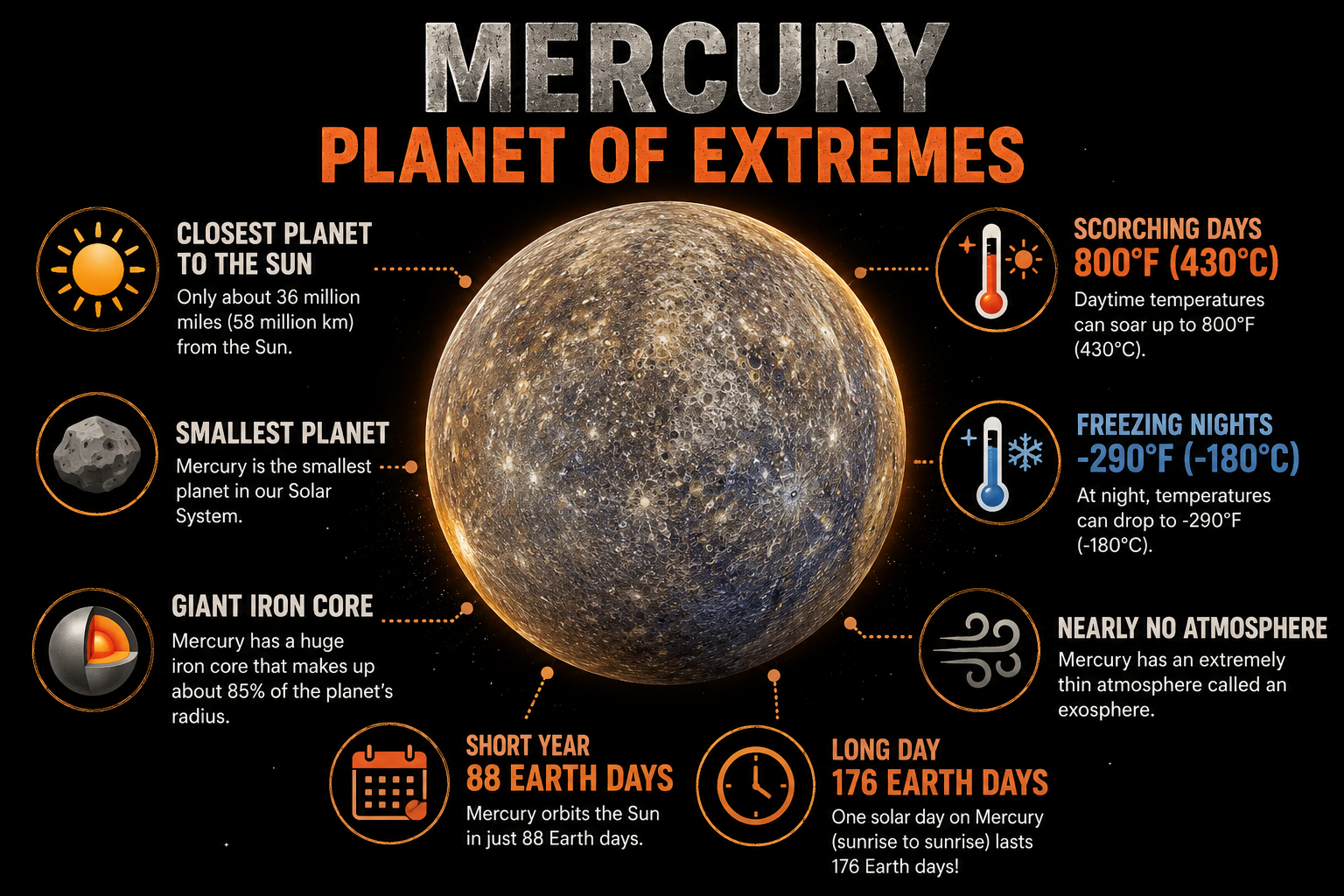
Mercury may be small, but it is a planet of incredible extremes. Discover why its days are scorching hot, its nights are freezing cold, and why time works differently here than anywhere else in our Solar System.
🌟 Why It Matters
Mercury teaches scientists how planets can survive in harsh environments and helps us understand how rocky planets formed billions of years ago.
🚀 Explorer Challenge
Review the information below, what extremes stood out to you?
Mercury Missions
Meet the Explorers of Mercury
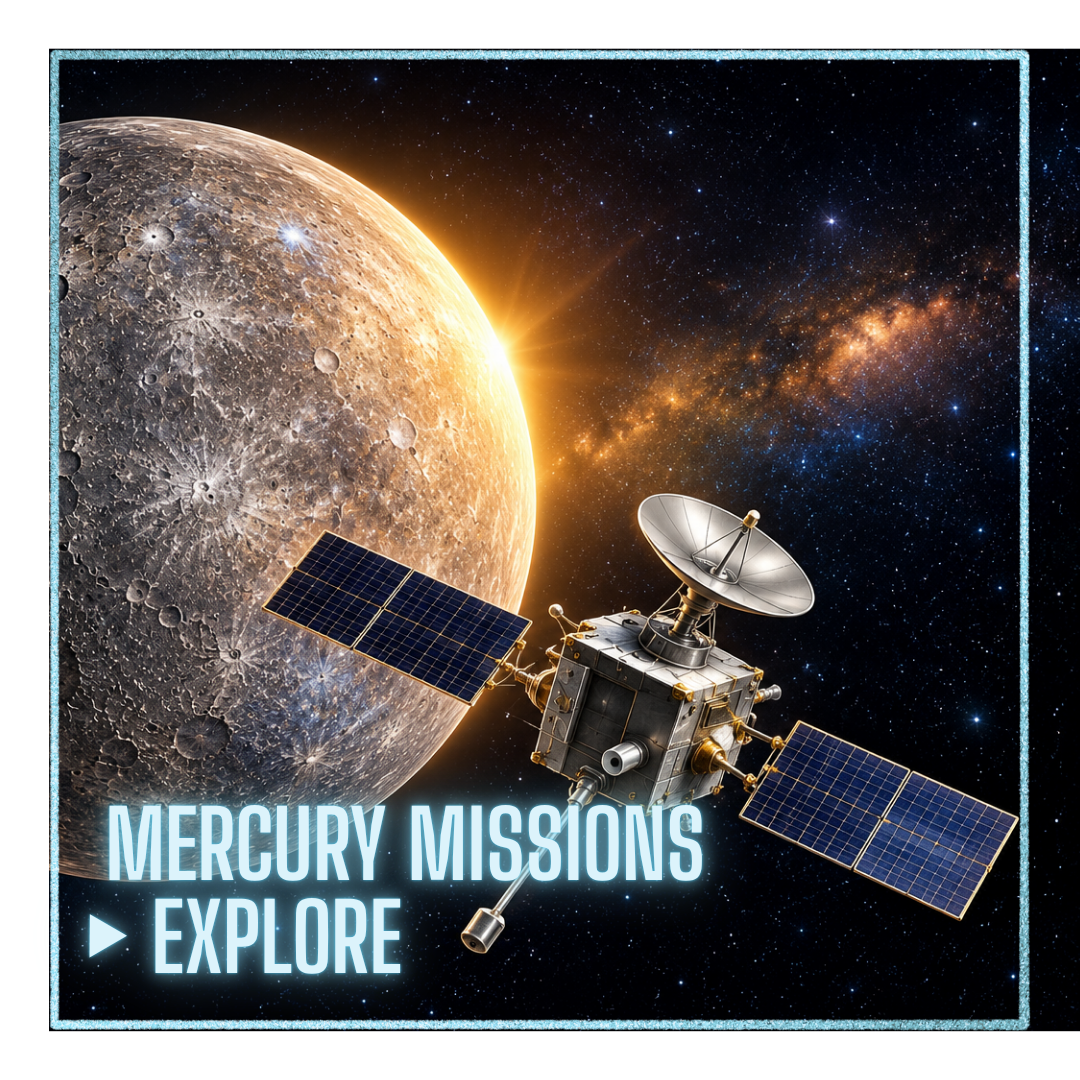
Mercury is the smallest planet in our Solar System and one of the hardest worlds to explore. As it travels so close to the Sun, spacecraft must survive intense heat and carefully use gravity to reach it. Although only a few missions have visited Mercury, each one has transformed what we know about this remarkable planet.
🌟 Why It Matters
Every mission has uncovered new clues about Mercury's ancient surface, giant iron core, magnetic field, and mysterious polar ice. Together, these discoveries help scientists better understand how the rocky planets in our Solar System formed.
🚀 Explorer Challenge
Each spacecraft has a different mission. As you explore, see if you can discover:
- Which spacecraft was the first to visit Mercury.
- Which spacecraft became the first to orbit Mercury.
- Which spacecraft is still on its journey to Mercury.
- Which mission discovered water ice hidden inside permanently shadowed craters.
Can you figure out why scientists continue sending new missions to Mercury?
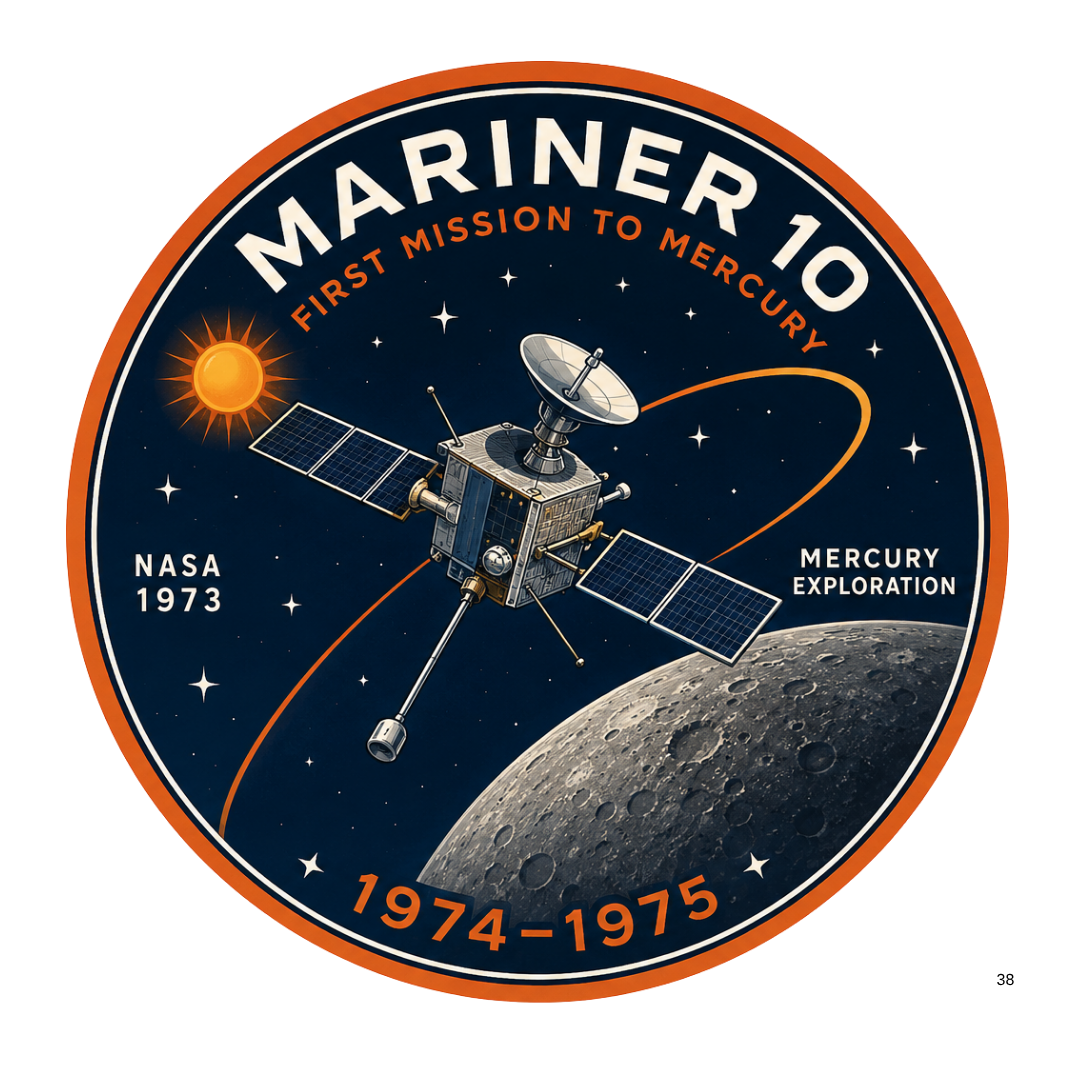
Mariner 10
The First Visitor
Mariner 10 became the first spacecraft to visit Mercury in 1974. During three flybys, it captured the first close-up photographs of the planet and made discoveries that changed how scientists understood Mercury.
Mission Snapshot
- Launch Date: November 3, 1973
-
Agency: NASA
-
Mission Type: Flyby
-
Mercury Flybys: Three (1974–1975)
-
Status: Mission Complete
🌟 Why This Mission Matters
Before Mariner 10, Mercury was one of the least understood planets in our Solar System. Its flybys revealed a heavily cratered surface, discovered that Mercury has a magnetic field, and gave scientists their very first close-up look at the planet.
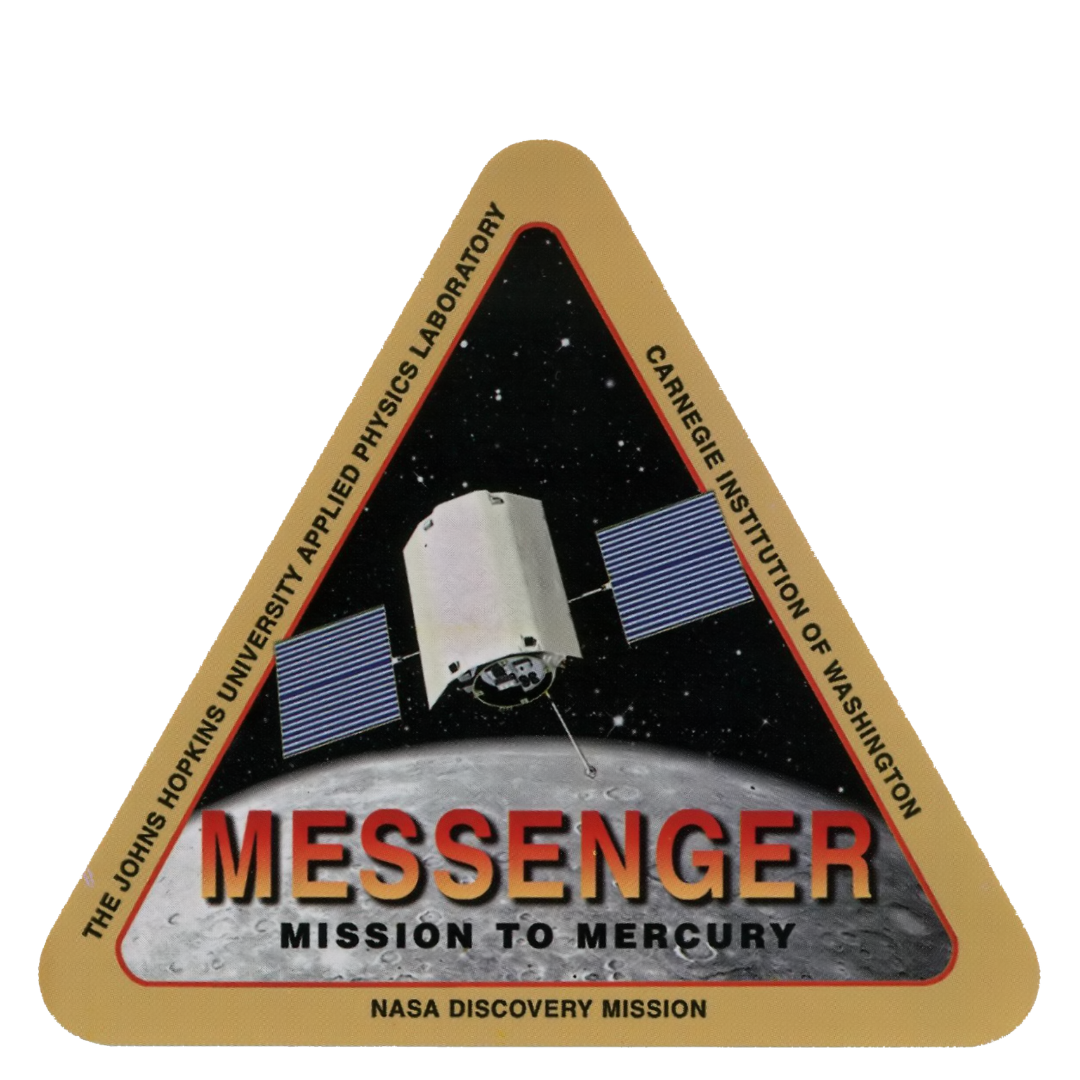
MESSENGER
The First Orbiter
MESSENGER became the first spacecraft to orbit Mercury. During more than four years around the planet, it mapped the entire surface, studied Mercury's interior, and discovered water ice hidden in permanently shadowed craters near the poles.
Mission Snapshot
- Launch Date: August 3, 2004
-
Agency: NASA
-
Mission Type: Orbiter
-
Mercury Orbit: 2011–2015
-
Status: Mission Complete
🌟 Why This Mission Matters
MESSENGER completely changed what scientists knew about Mercury. It showed that the planet has a surprisingly large iron core, confirmed water ice at its poles, and created the first complete map of Mercury's surface.
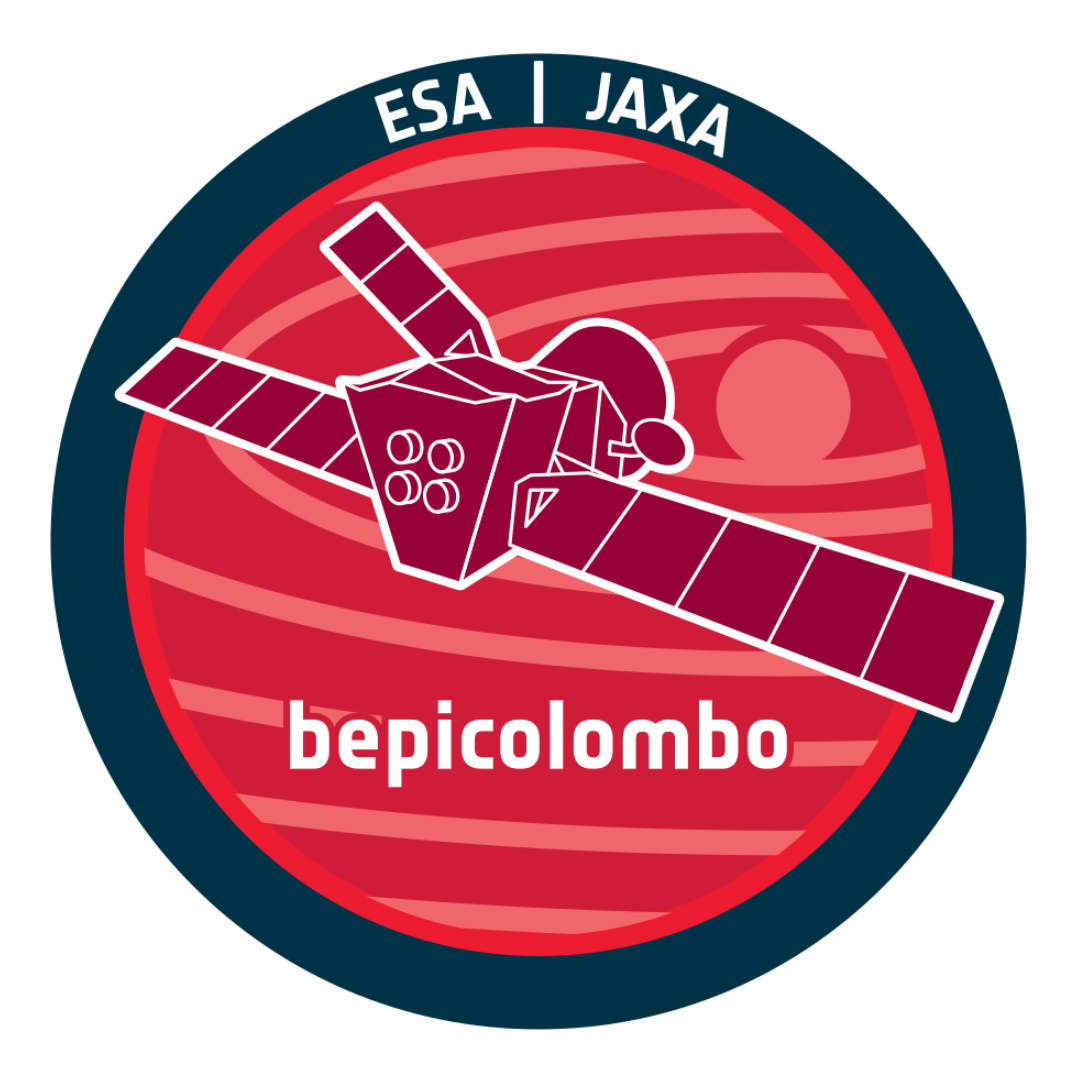
BepiColombo
The Next Explorer
BepiColombo is a joint mission between the European Space Agency (ESA) and the Japan Aerospace Exploration Agency (JAXA). It is designed to study Mercury's interior, magnetic field, and surface in greater detail than ever before.
Mission Snapshot
- Launch Date: October 20, 2018
- Agencies: ESA & JAXA
- Mission Type: Orbiter
- Mercury Arrival: 2026
- Status: Active
🌟 Why This Mission Matters
BepiColombo will help answer some of Mercury's biggest mysteries, including how its magnetic field works, why its giant iron core formed, and how the planet evolved over billions of years.
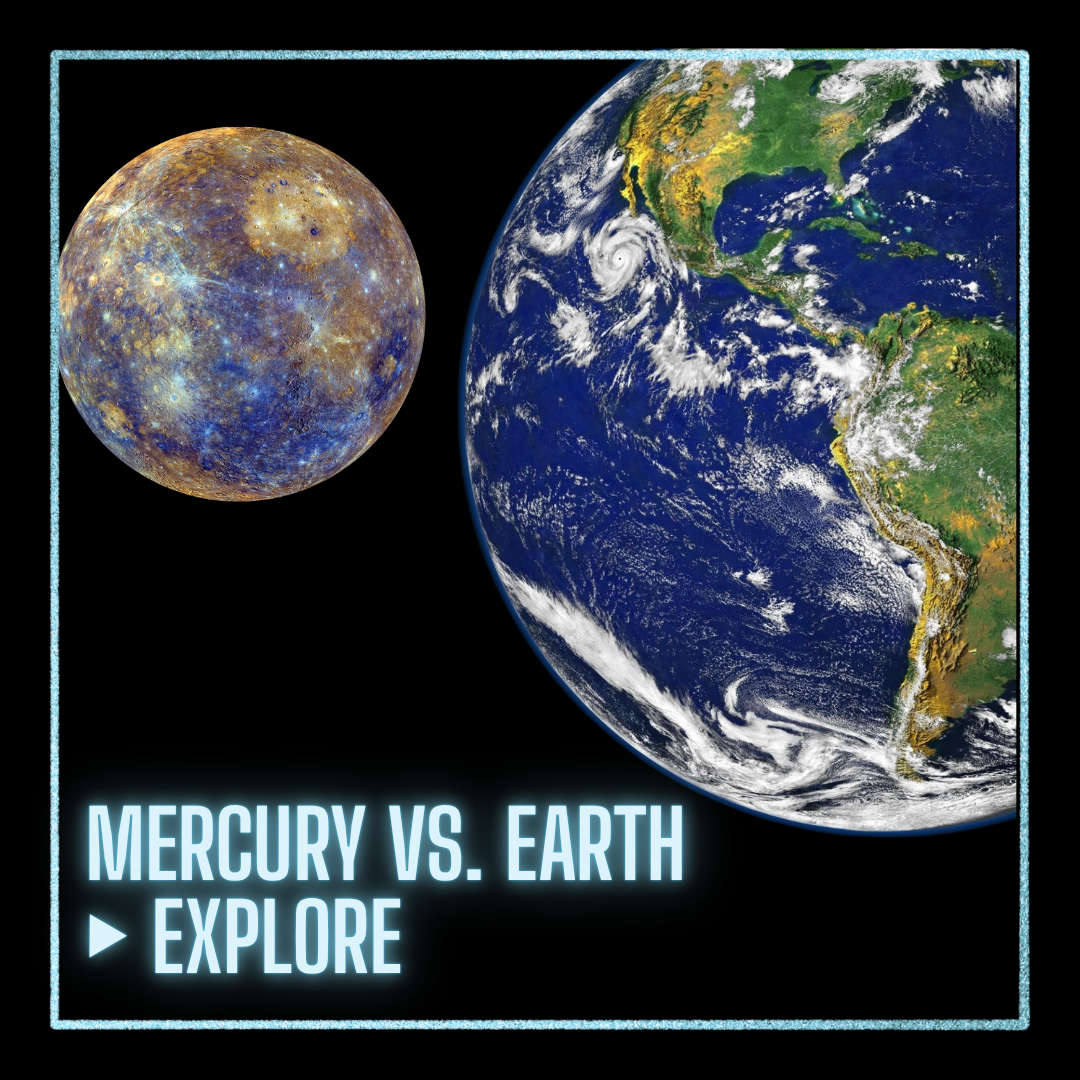
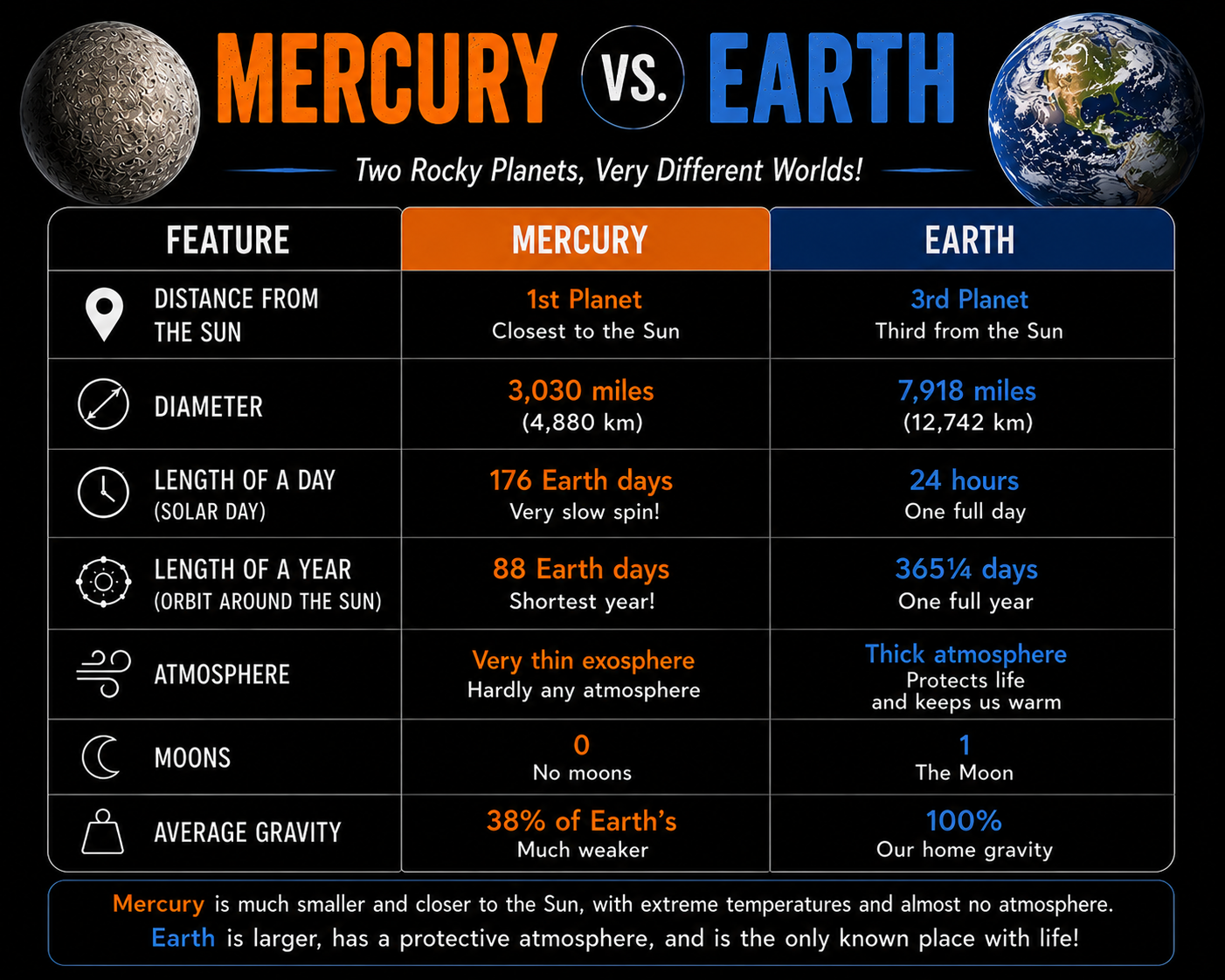
Mercury vs. Earth
How Does Mercury Compare to Our Home Planet?
Mercury and Earth are both rocky planets, but that's where many of their similarities end. Compare the two worlds and discover just how unique Mercury really is.
🌟 Why It Matters
Comparing planets helps scientists understand why Earth became a world filled with oceans and life while Mercury remained a hot, rocky planet with almost no atmosphere.
🚀 Explorer Challenge
As you compare the two planets, see if you can discover:
- Which planet is larger.
- Which planet has the shorter year.
- Which planet has a longer day.
- Which planet is the only one known to support life.
If you could spend one day on either planet, which would you choose... and why?
Games and More
Your Mission Continues.
You've learned about our nearest star. Now it's time to test your knowledge, complete challenges, and see if you can earn your Space Explorer badge.
🚀 Explorer Challenge
- Play the Kahoot game
- Practice Mercury Vocabulary
- Get Your Mission Badge!
Which fact about Mercury surprised you most?


Ready for the Full Mission?
Want to dive deeper into Mercury?
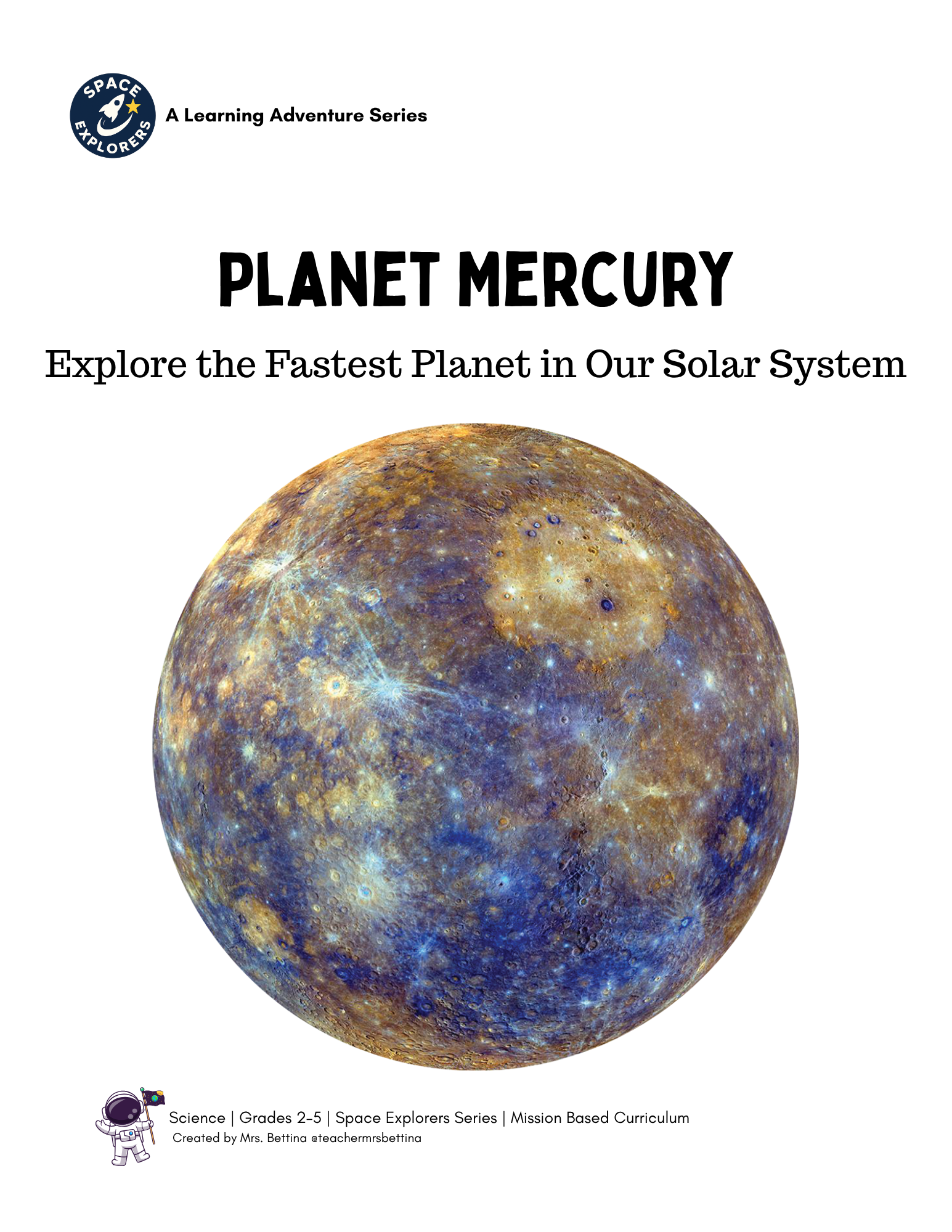
The complete Mercury unit includes printable missions, STEM activities, critical thinking, Kahoots, certificates, and much more.
This standards-aligned, mission-based unit helps young explorers learn all about our closest star through engaging activities, hands-on investigation, and real-world connections.
Inside you'll find...
✔ 6 Reading Lessons
✔ Science Logs
✔ STEM Challenges
✔ Vocabulary
✔ Final Kahoot
✔ Explorer Certificate
This printable unit is the perfect way to dive deeper into the Mercury and build a strong foundation in Space science. It is great for classrooms, homeschool, co-ops, and other educational settings.
Parents will appreciate the flexibility, teachers will use it year after year, and kids will enjoy learning on their mission!