The Moon - Earth’s Neighbor
The Space Explorers
Moon Mission Headquarters
Welcome, Explorer.
The Moon has guided calendars, inspired stories, shaped Earth’s tides, and become the first world beyond Earth that humans explored in person. Follow the missions below to discover how the Moon changes in our sky, what its surface is really like, and how scientists continue exploring it today.
Follow the mission map to meet the Moon, investigate its phases, explore the spacecraft that have studied it, compare the Moon with Earth, and test what you discover through games and challenges.
Moon Mission Map
Select a mission to begin exploring the Moon.
Meet the Moon
Discover Earth’s closest neighbor in space.
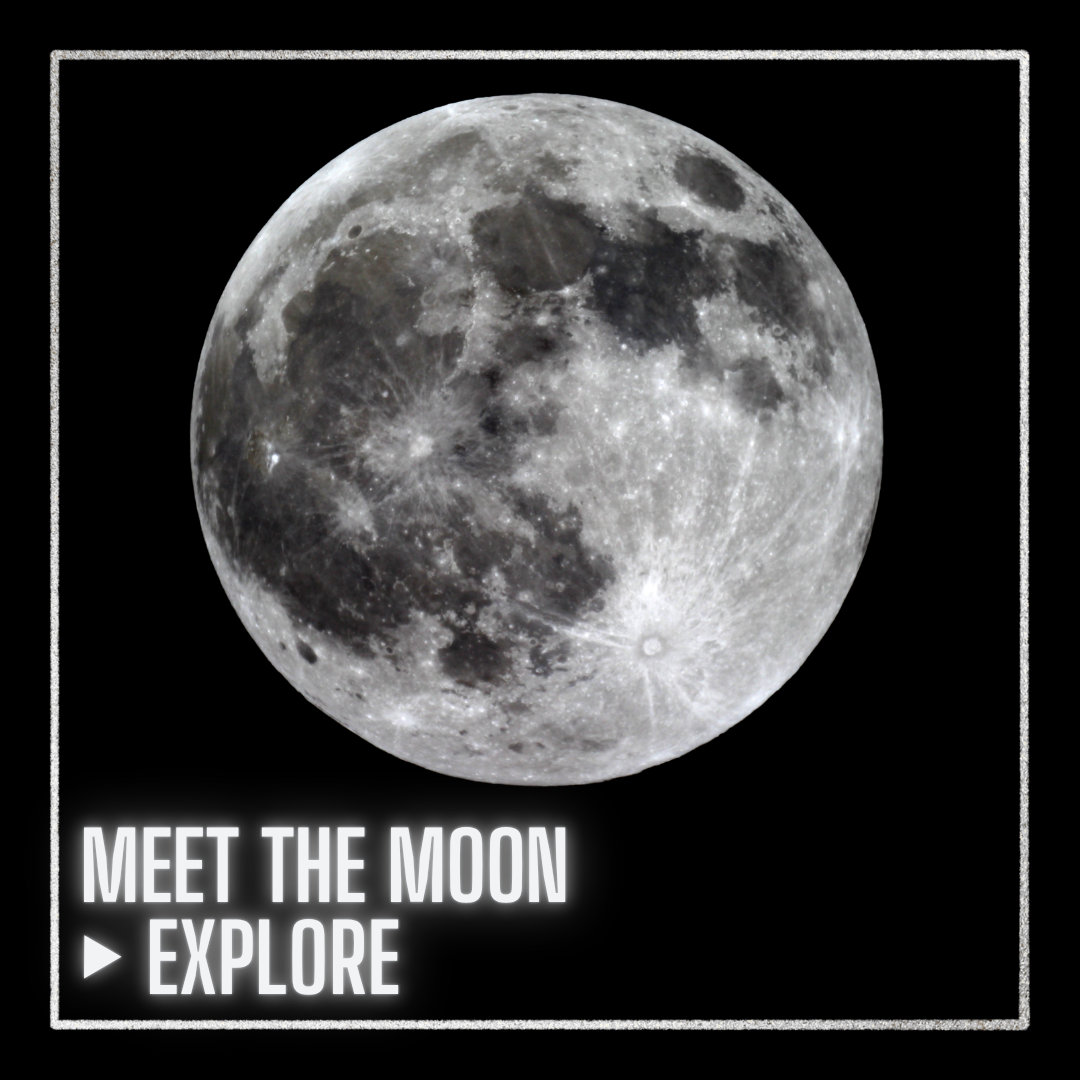
The Moon is Earth’s only natural satellite and the brightest object in our night sky after the Sun. Its rocky surface is covered with mountains, valleys, dark plains, and countless craters left by impacts over billions of years.
🌟 Why It Matters
The Moon does more than light up our night sky. Its gravity helps create Earth’s tides, and studying its rocks and surface gives scientists clues about the early history of Earth and our Solar System.
🚀 Explorer Challenge
Watch the video below. Can you discover three surprising facts about the Moon before it ends?
Moon Phases
Discover why the Moon seems to change shape in our sky.
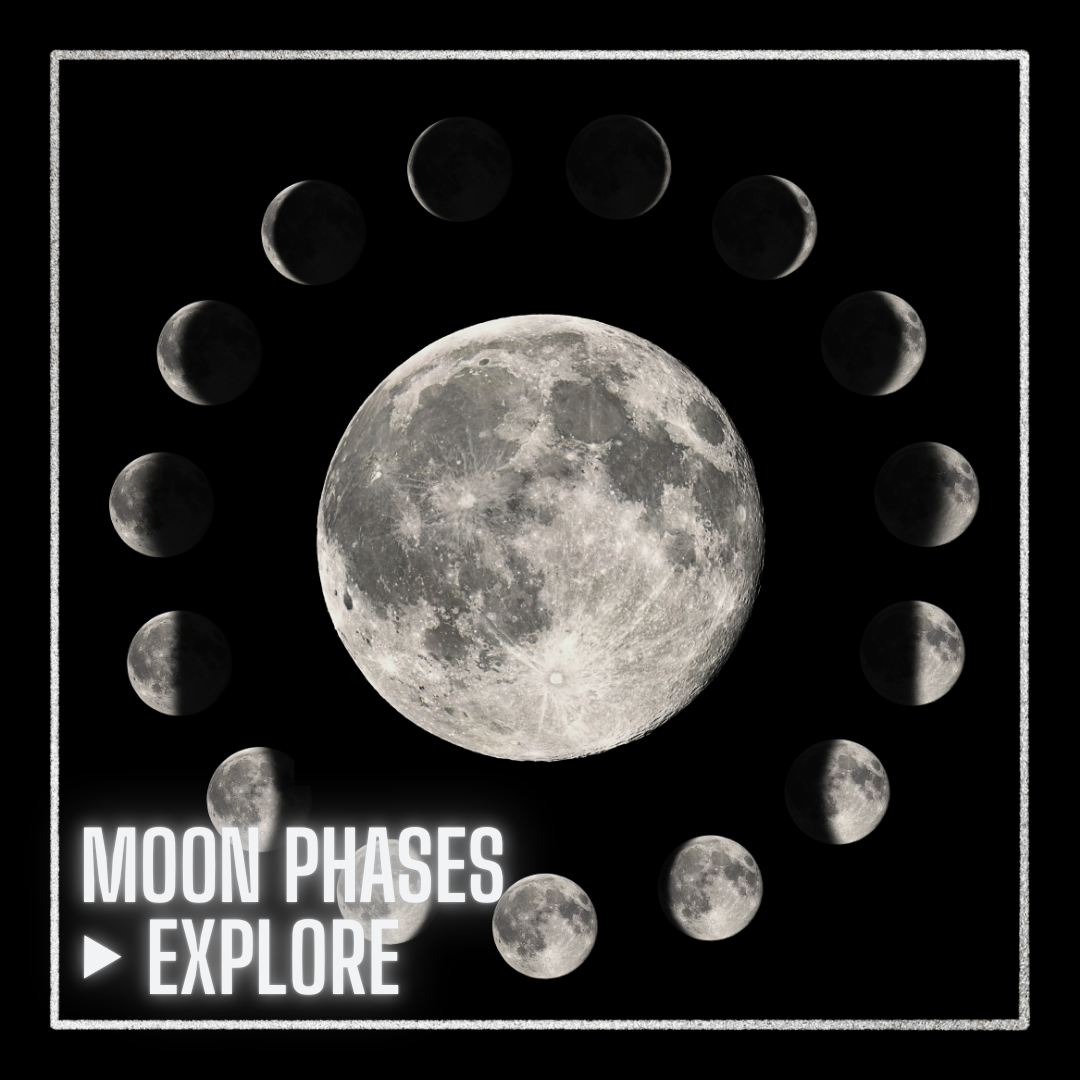
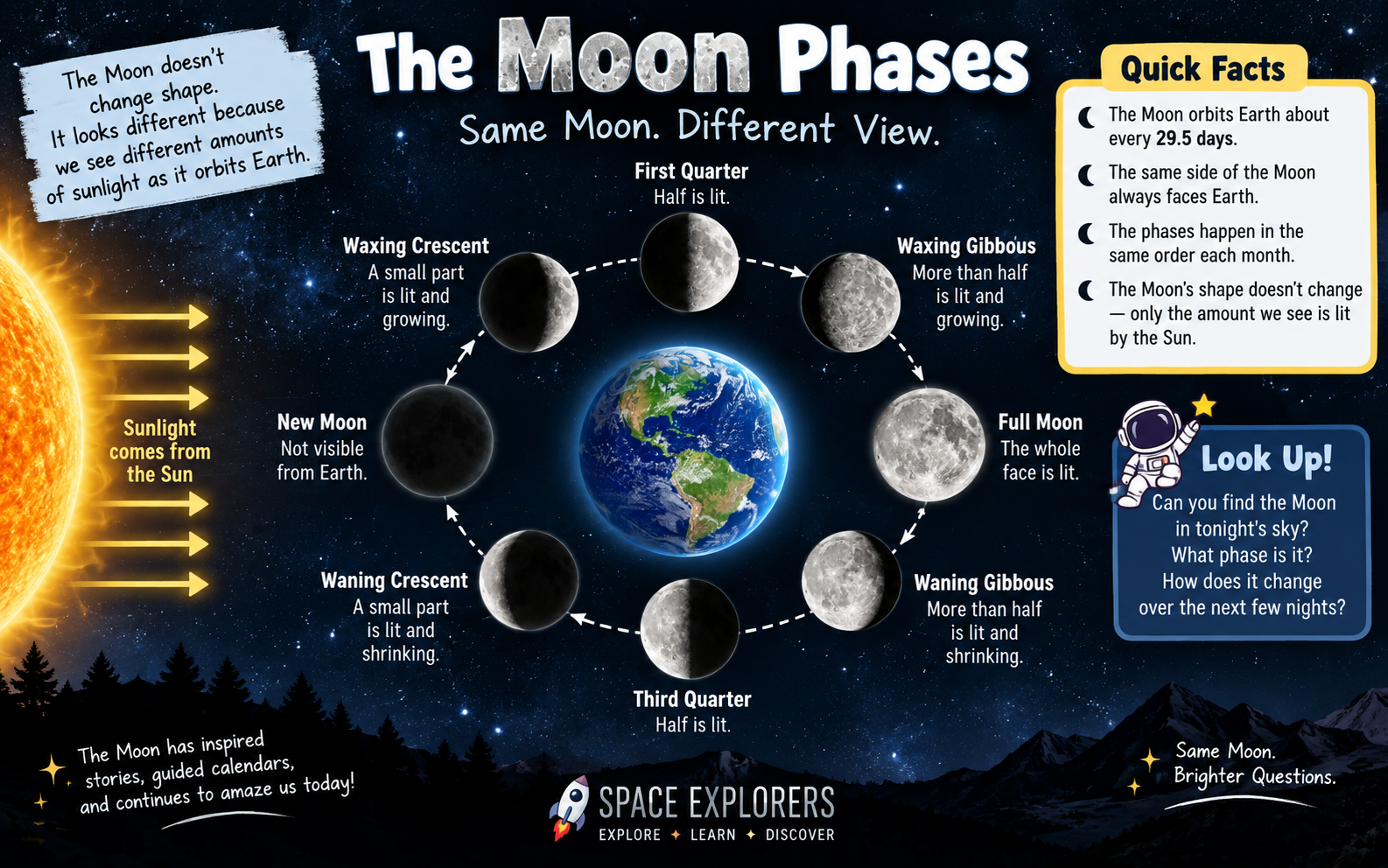
The Moon may look different from night to night, but its shape isn’t really changing. As the Moon travels around Earth, sunlight illuminates different portions of the side we can see. These changing views are called Moon phases, and the pattern repeats about every month.
🌟 Why It Matters
Learning the Moon’s phases helps us understand how the Sun, Earth, and Moon move and interact. People have watched these repeating patterns for thousands of years to track time, create calendars, and understand the night sky.
🚀 Explorer Challenge
Study the Moon phases below. Can you find the new moon, first quarter, full moon, and third quarter? What do you notice about the pattern as the Moon travels around Earth?
Moon Missions
Meet the Explorers of the Moon
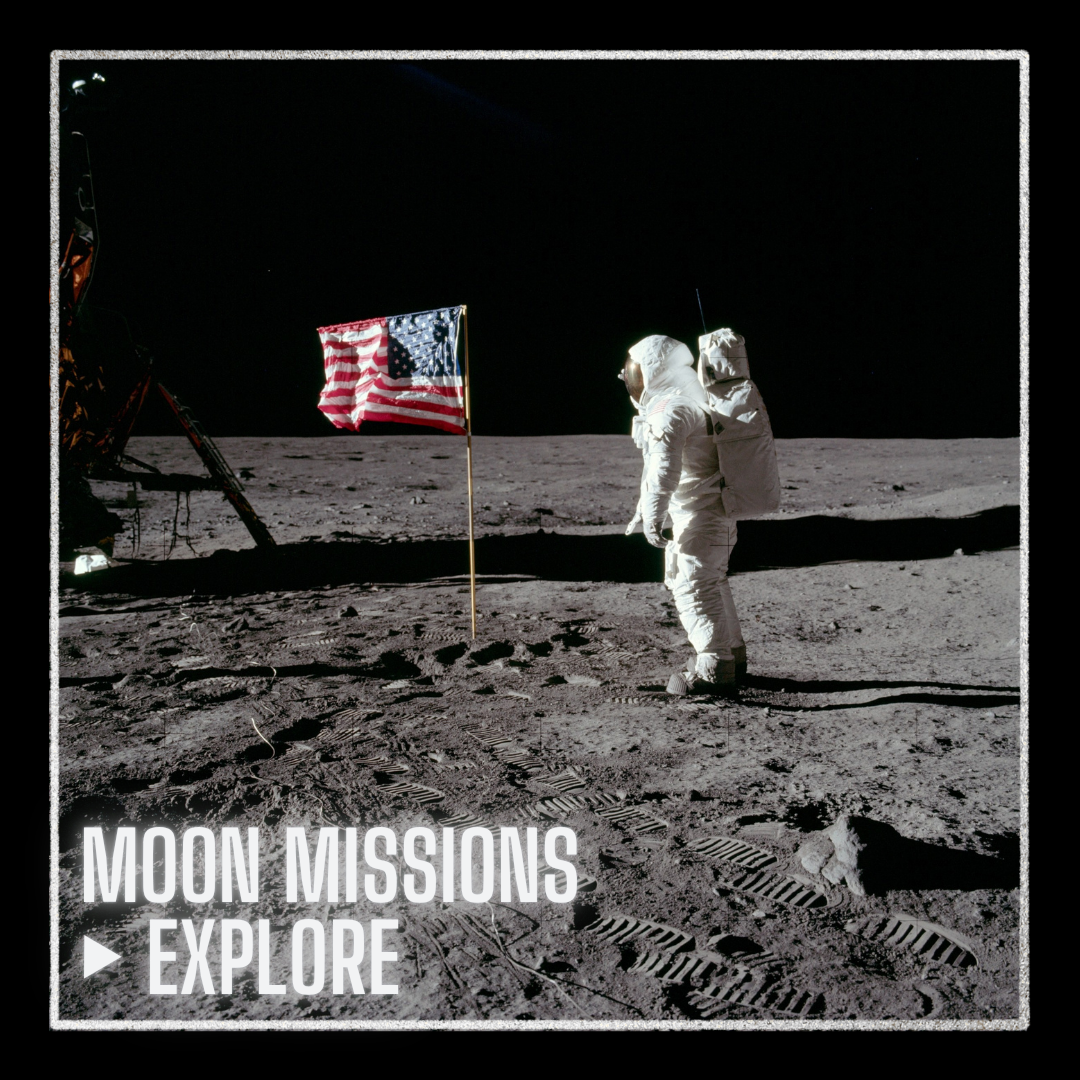
The Moon is the only world beyond Earth that humans have visited in person, but our exploration began with robotic spacecraft. Over time, missions have landed on its surface, carried astronauts there, mapped it in incredible detail, and sent humans around the Moon once again.
🌟 Why It Matters
Each Moon mission has helped us understand our closest neighbor a little better. Scientists have learned about the Moon’s surface, collected rocks from another world, mapped its craters and polar regions, and gathered information that will help guide future exploration.
🚀 Explorer Challenge
Each mission below represents a different step in Moon exploration. As you explore, see if you can discover:
- Which spacecraft made the first successful soft landing on the Moon?
- Which mission put the first humans on the Moon?
- Which spacecraft is still mapping and studying the Moon today?
- Which mission carried humans around the Moon again in 2026?
How has Moon exploration changed from the first robotic landers to the missions of today?
Luna 9
The First Soft Landing
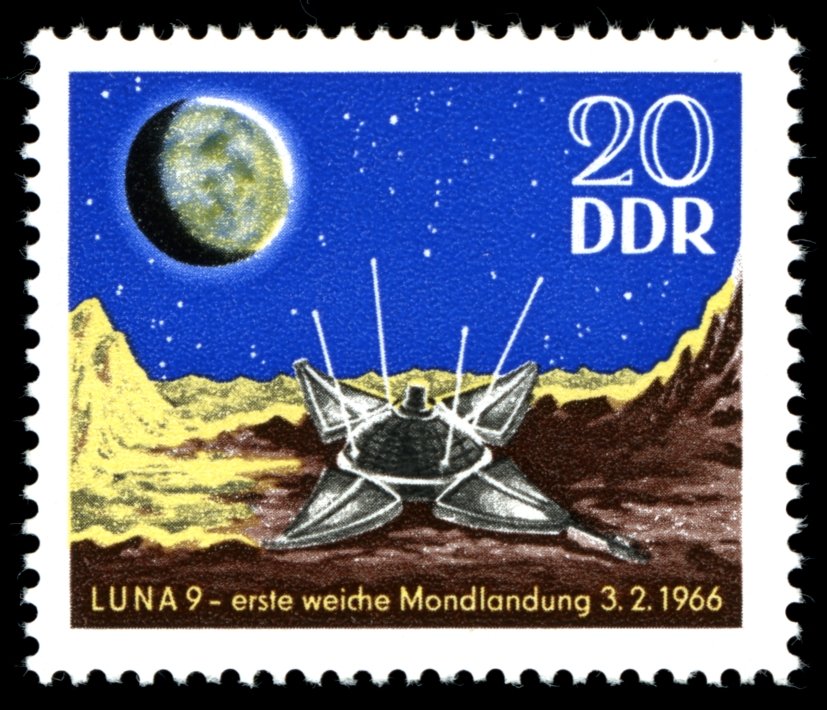
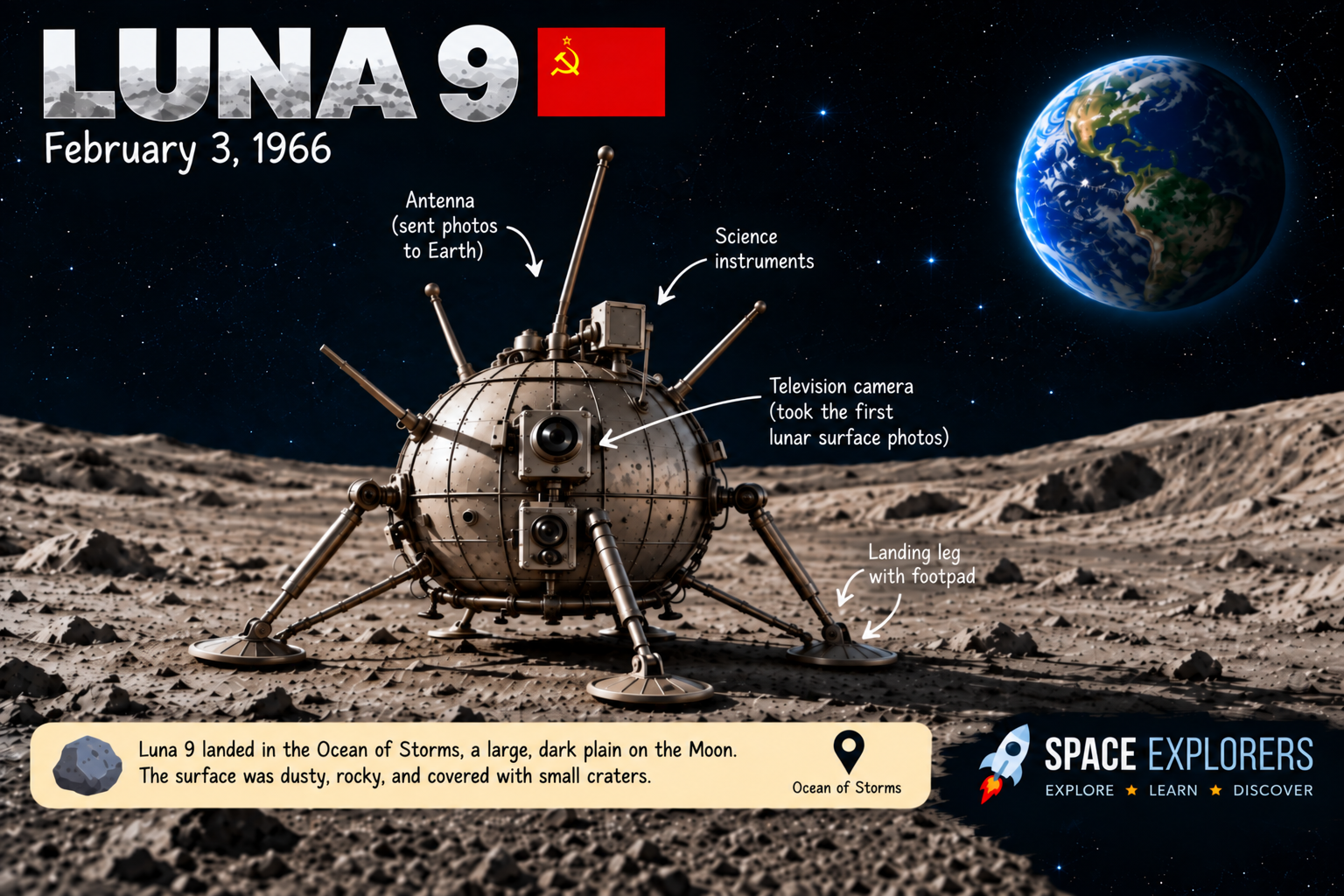
Luna 9 became the first spacecraft to successfully land softly on the Moon in 1966. After touching down in the Ocean of Storms, it sent back the first photographs ever taken from the surface of another world, proving that the lunar surface could support a spacecraft.
Mission Snapshot
- Launch Date: January 31, 1966
- Agency: Soviet space program (USSR)
- Mission Type: Lunar lander
- Moon Landing: February 3, 1966
- Landing Area: Ocean of Storms (Oceanus Procellarum)
- Status: Mission Complete
🌟 Why This Mission Matters
Before Luna 9, scientists weren't certain that a spacecraft could safely rest on the Moon's dusty surface. Luna 9 showed that the ground was firm enough to support a lander and gave humanity its first look at the Moon from the surface itself. Its success helped open the way for the lunar missions that followed.
APOLLO 11
The First Human Moon Landing
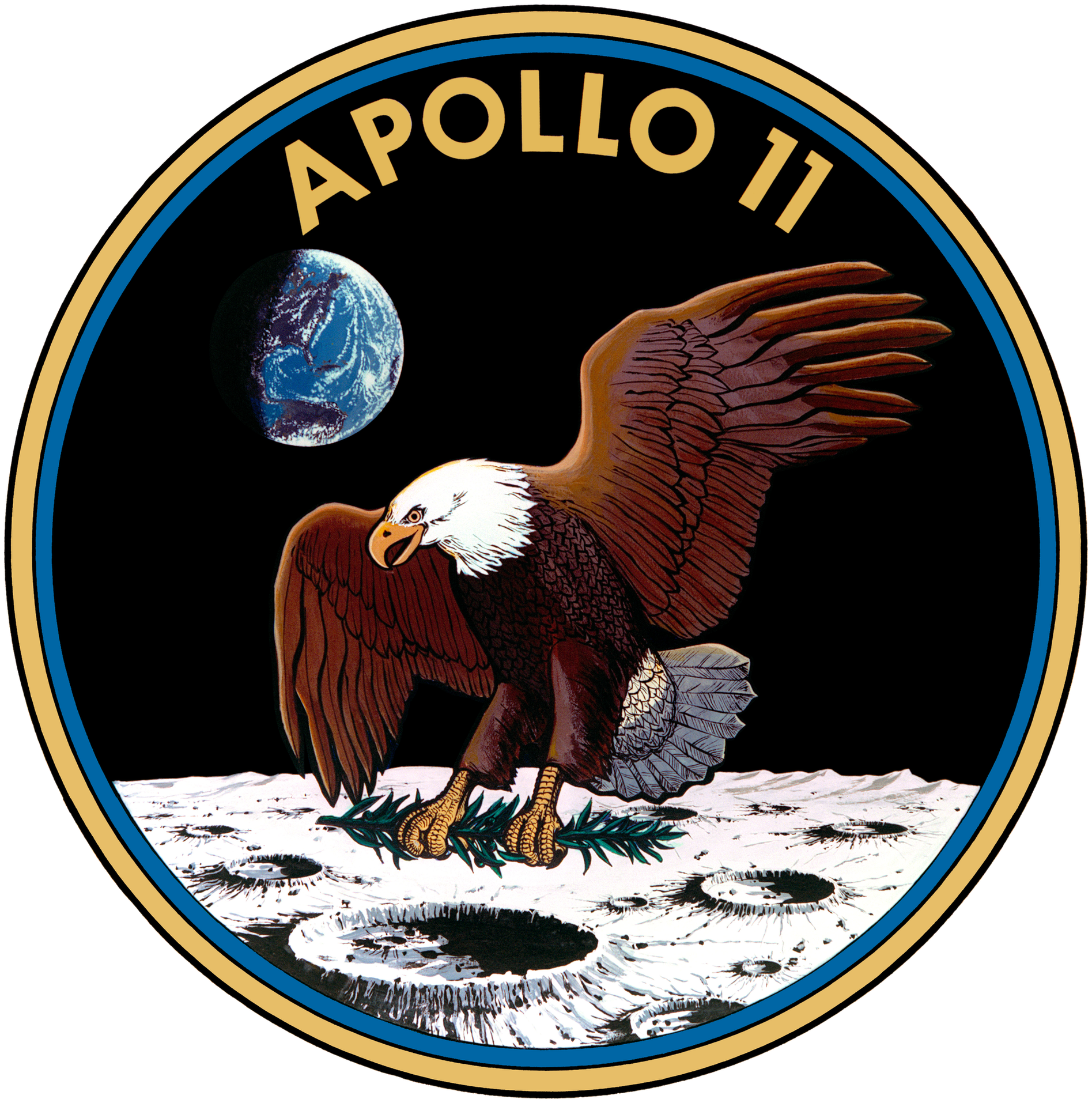
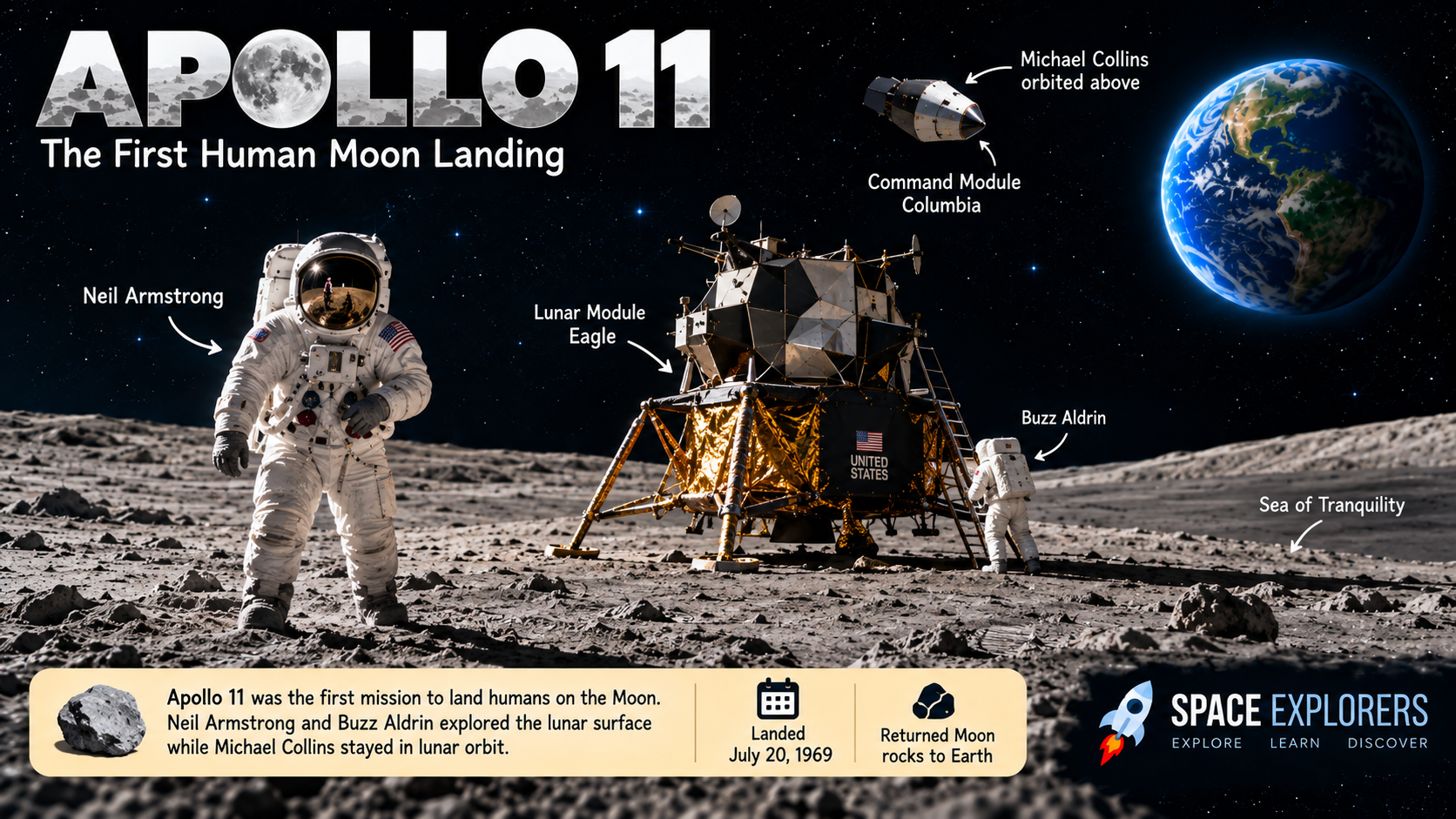
Apollo 11 became the first mission to land humans on the Moon in 1969. Neil Armstrong and Buzz Aldrin explored the lunar surface while Michael Collins remained in orbit aboard the Command Module Columbia. The astronauts collected Moon rocks, conducted experiments, and returned safely to Earth.
Mission Snapshot
- Launch Date: July 16, 1969
- Agency: NASA
- Mission Type: Crewed lunar landing
- Moon Landing: July 20, 1969
- Landing Site: Sea of Tranquility
- Crew: Neil Armstrong, Buzz Aldrin & Michael Collins
- Status: Mission Complete
🌟 Why This Mission Matters
Apollo 11 proved that humans could travel to another world, land safely, explore its surface, and return to Earth. The rocks and scientific measurements brought home helped scientists learn more about the Moon’s history and changed human space exploration forever.
Lunar Reconnaissance Orbiter
Mapping the Moon
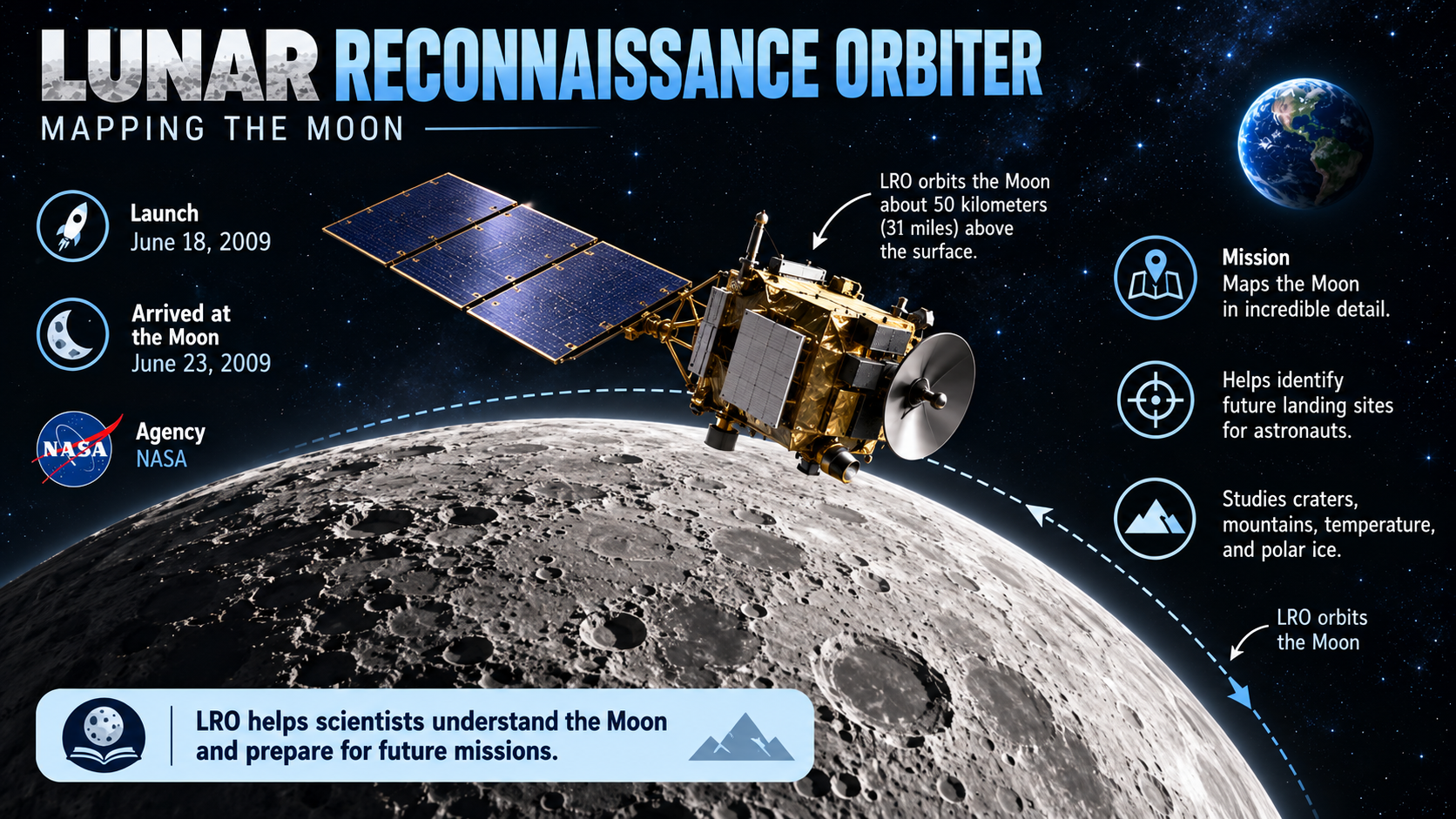
NASA’s Lunar Reconnaissance Orbiter, or LRO, has been studying the Moon from orbit since 2009. It has mapped the lunar surface in extraordinary detail, measured temperatures and radiation, studied the Moon’s composition, and helped scientists investigate resources such as water near the poles. Its data also helps identify safer places for future spacecraft and astronauts to land.
Mission Snapshot
- Launch Date: June 18, 2009
- Agency: NASA
- Mission Type: Lunar orbiter
- Entered Lunar Orbit: June 23, 2009
- Primary Target: Earth’s Moon
- Status: Active Mission
🌟 Why This Mission Matters
LRO has given scientists one of the most detailed views of the Moon ever created. Its maps and measurements help researchers study craters, temperatures, radiation, polar regions, and possible water resources, and they are still being used to help plan future lunar exploration.
Artemis II
Humans Return to the Moon
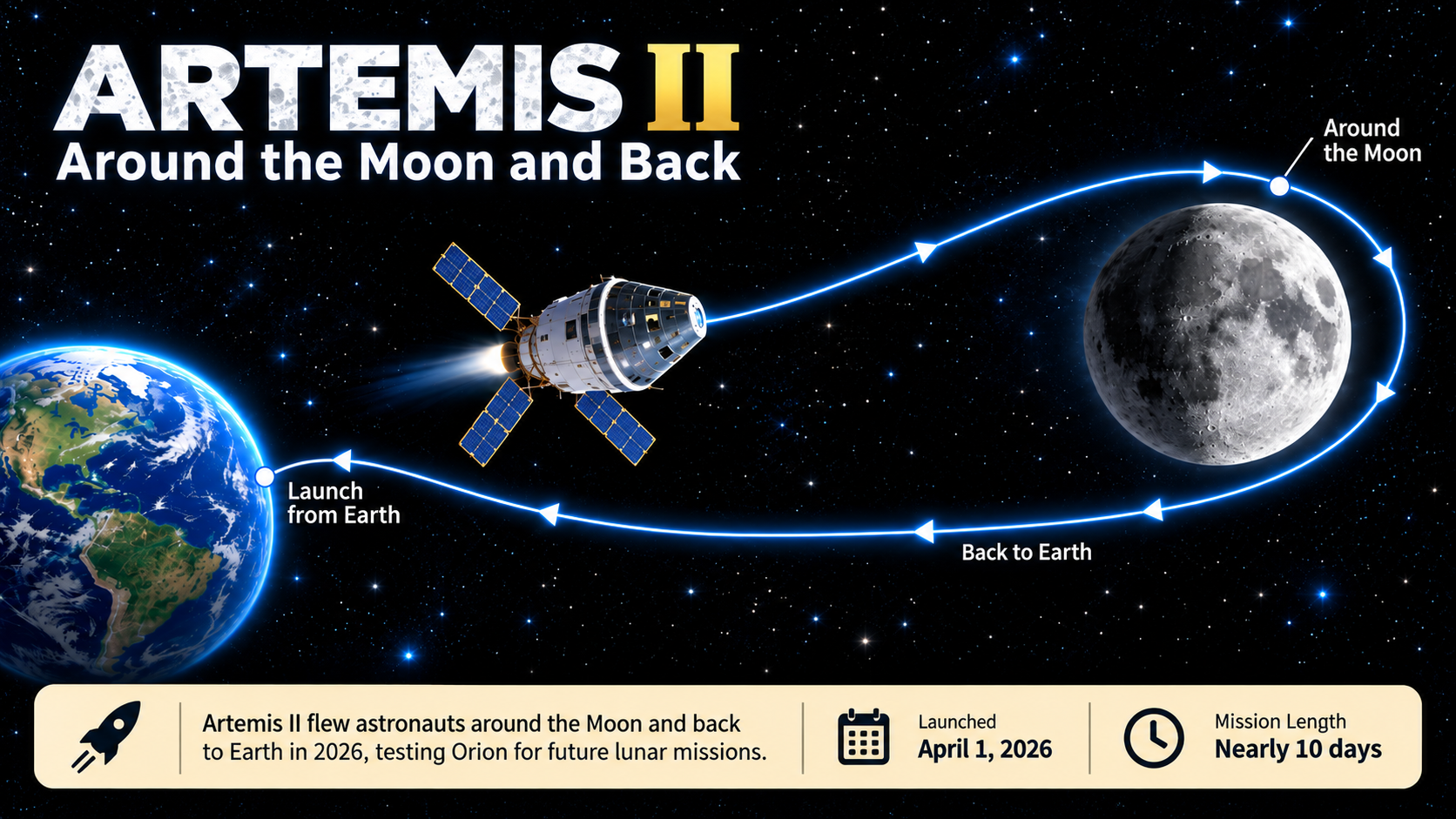
Artemis II carried four astronauts around the Moon in 2026, marking humanity’s first crewed journey to the Moon since Apollo 17 in 1972. Flying aboard NASA’s Orion spacecraft, Reid Wiseman, Victor Glover, Christina Koch, and Jeremy Hansen traveled around the Moon and returned safely to Earth while testing systems needed for future lunar missions.
Mission Snapshot
- Launch Date: April 1, 2026
- Agency: NASA, with Canadian Space Agency participation
- Mission Type: Crewed lunar flyby
- Crew: Reid Wiseman, Victor Glover, Christina Koch & Jeremy Hansen
- Mission Length: Nearly 10 days
- Status: Mission Complete
The Moon vs. Earth
Two Rocky Worlds, Two Different Places
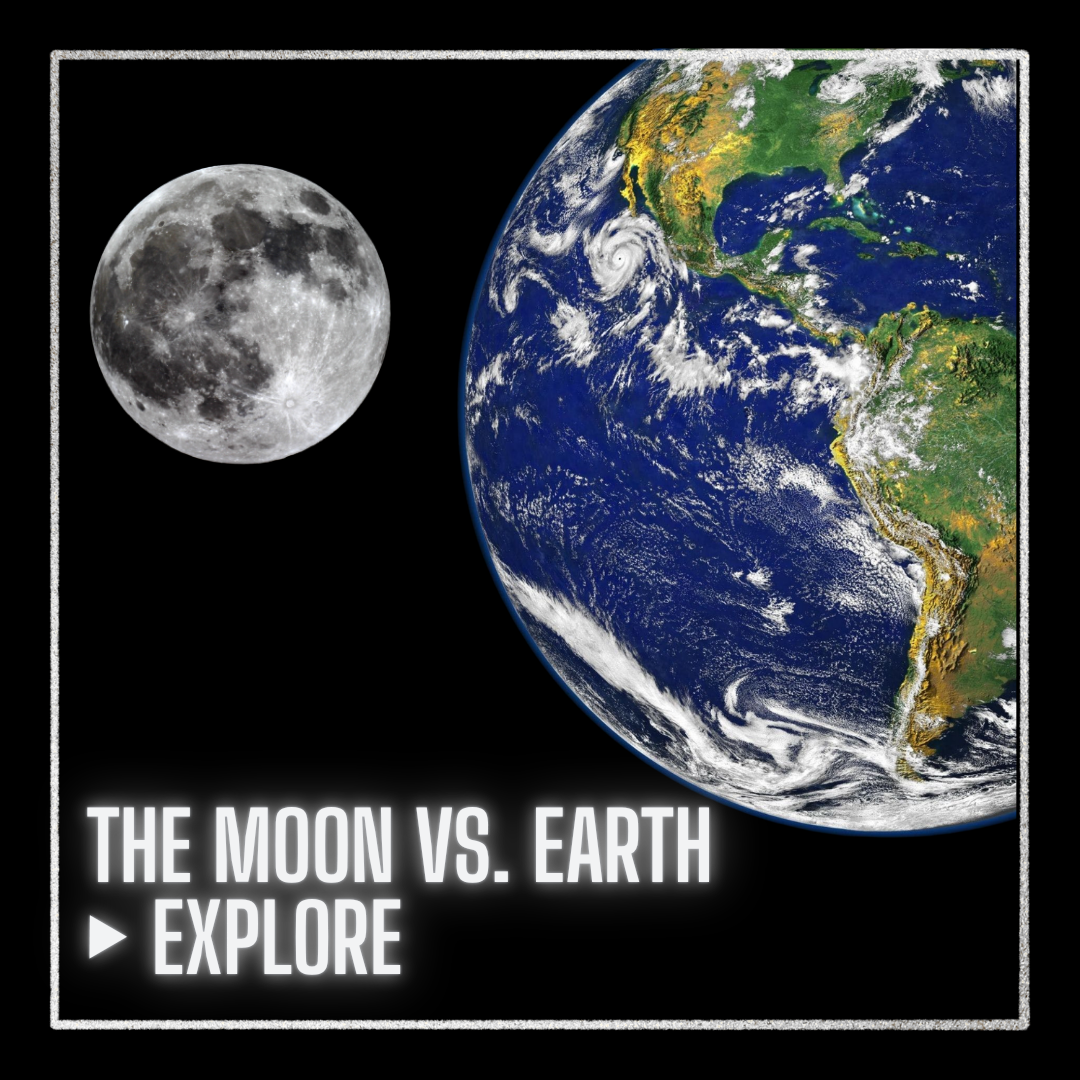
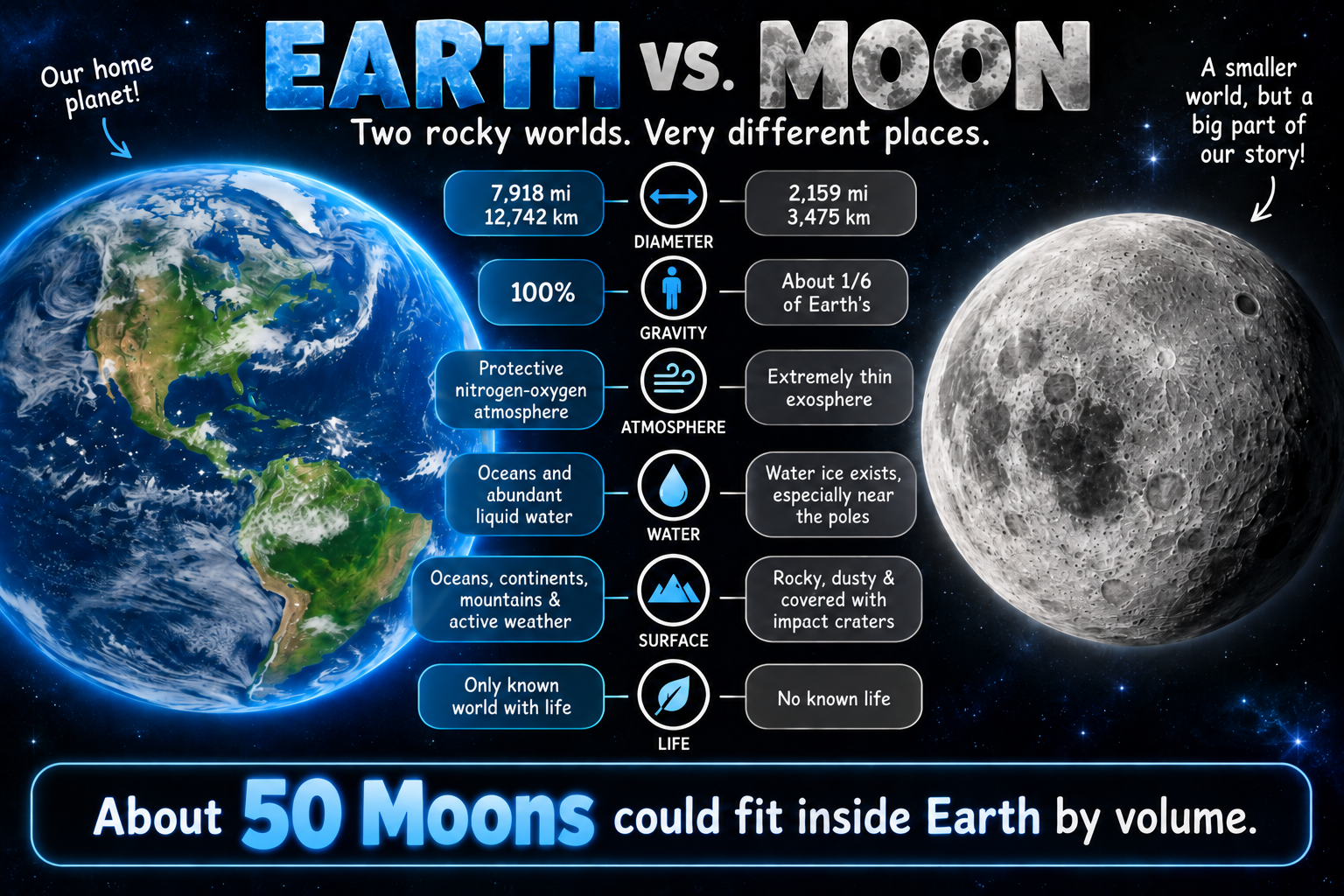
The Moon may look enormous in our night sky, but it is much smaller than Earth. These two worlds are connected by gravity and share a long history, yet their surfaces, atmospheres, temperatures, and environments are very different.
🌟 Why It Matters
Comparing the Moon with Earth helps us understand why our planet can support life, and why exploring the Moon requires spacesuits, spacecraft, and careful planning.
🚀 Explorer Challenge
Compare Earth and the Moon below. Which difference surprises you most? What would make living on the Moon difficult for humans?
Games and More
Your Mission Continues.
You've learned about our nearest star. Now it's time to test your knowledge, complete challenges, and see if you can earn your Space Explorer badge.
🚀 Explorer Challenge
- Play the Kahoot game
- Practice Moon Vocabulary
- Get Your Mission Badge!
Which fact about the Moon surprised you most?
Ready for the Full Mission?
Want to dive deeper into the Moon?
The complete Moon unit includes printable missions, STEM activities, critical thinking, Kahoots, certificates, and much more.
This standards-aligned, mission-based unit helps young explorers learn all about our closest star through engaging activities, hands-on investigation, and real-world connections.
Inside you'll find...
✔ 6 Reading Lessons
✔ Science Logs
✔ STEM Challenges
✔ Vocabulary
✔ Final Kahoot
✔ Explorer Certificate
This printable unit is the perfect way to dive deeper into the Moon and build a strong foundation in Space science. It is great for classrooms, homeschool, co-ops, and other educational settings.
Parents will appreciate the flexibility, teachers will use it year after year, and kids will enjoy learning on their mission!