The Sun - Our Star
The Space Explorers
Sun Mission Headquarters
Welcome, Explorer.
The Sun is more than a bright light in the sky, it is the powerful star at the center of our Solar System and the source of the energy that supports life on Earth.
Follow the mission map to discover how the Sun works, explore sunspots and solar flares, meet the spacecraft studying our nearest star, compare the Sun with other stars, and test what you learn through games and challenges.
Sun Mission Map
Select a mission to begin exploring the Sun.
Meet Our Sun
Discover the star that makes life on Earth possible.
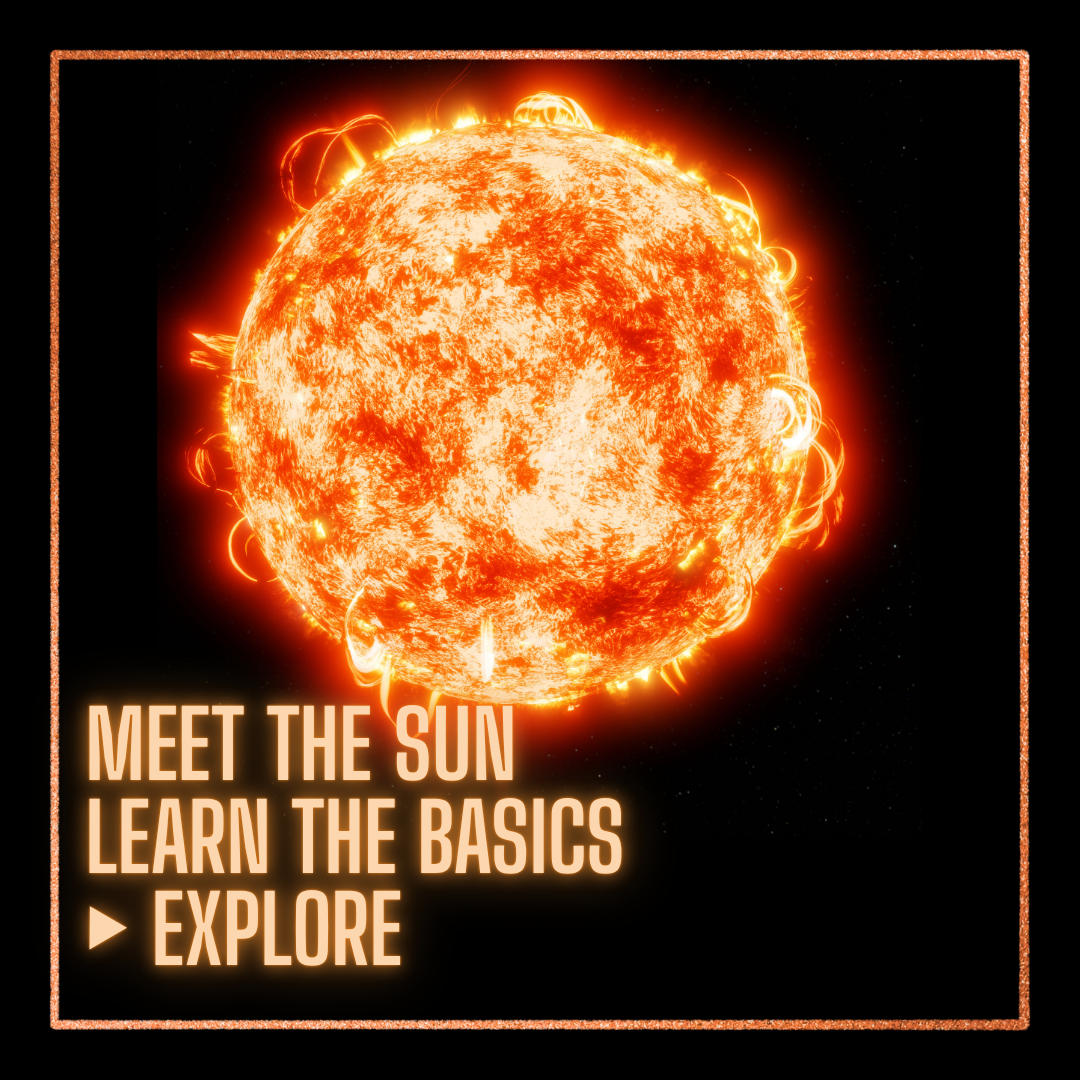
The Sun is the star of our Solar System and the closest star to Earth. It gives us the light and heat needed for life and has been shining for billions of years.
🌟 Why It Matters
Without the Sun, Earth would be a cold, dark world. Learning about our nearest star helps us understand weather, seasons, plants, and why life can exist on our planet.
🚀 Explorer Challenge
Watch the video below... can you name three ways the Sun helps us every day?
Explore Sunspots and Flares
Watch our active star change.
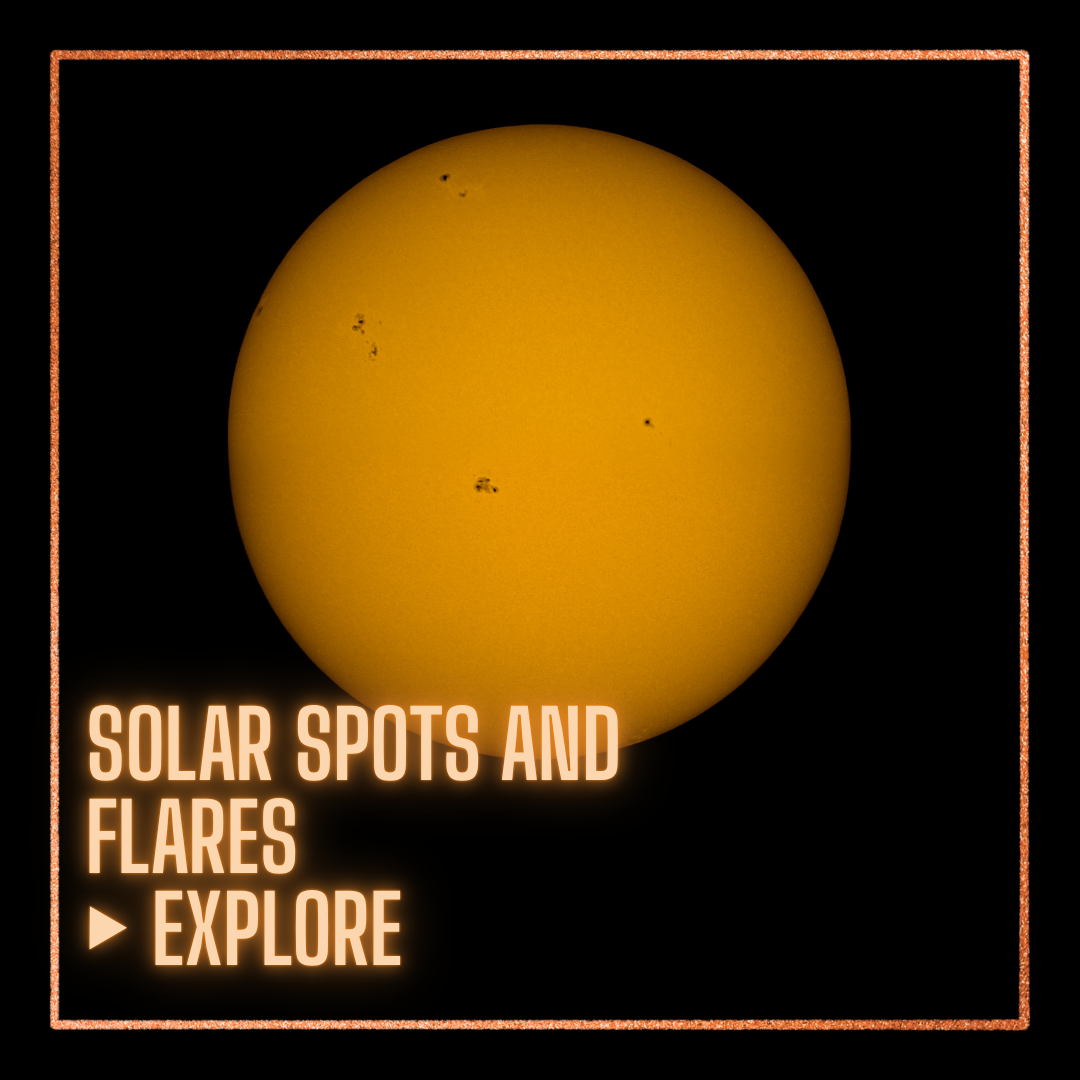
The Sun is always changing. Dark sunspots and powerful solar flares are signs of the Sun's magnetic activity and help scientists understand how our star works.
🌟 Why It Matters
Solar flares and other eruptions can affect satellites, astronauts, radio signals, and even power systems on Earth. By studying these events, scientists can better predict space weather.
🚀 Explorer Challenge
Look closely at the videos below... can you spot any dark sunspots? Why are they dark to us?
Solar Missions
Meet the Explorers of Our Star
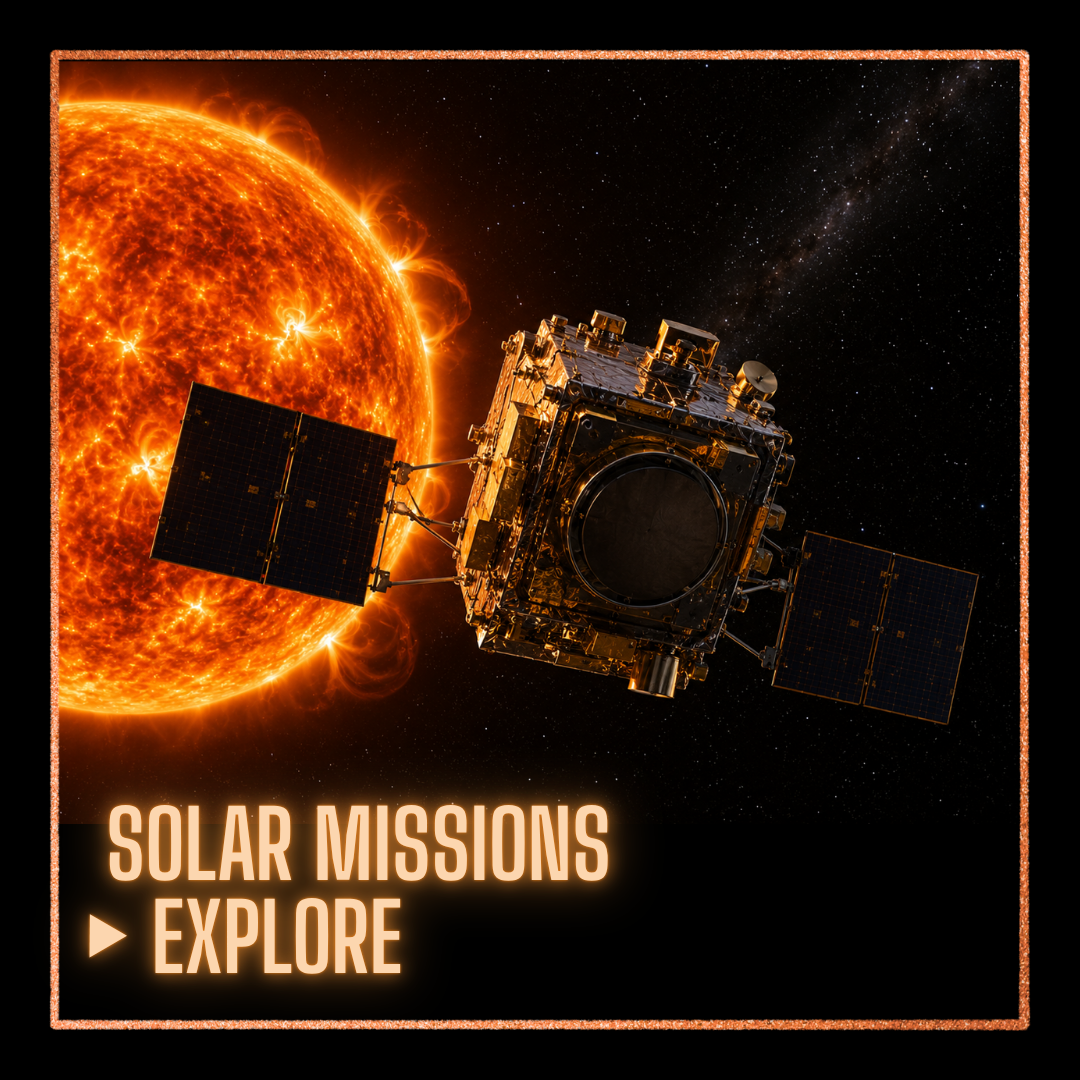
The Sun is too hot for people to visit, so scientists build incredible spacecrafts to do the exploring instead. Each mission has a special purpose, and together they reveal new discoveries about the star at the center of our Solar System.
🌟 Why It Matters
Every mission teaches us something new about the Sun. By working together, these spacecrafts help scientists better understand our star and how it affects life on Earth.
🚀 Explorer Challenge
Each spacecraft has a different mission. As you explore, see if you can discover:
- Which spacecraft flies closest to the Sun.
- Which spacecraft watches the entire Sun every day.
- Which spacecraft gives scientists a new view of the Sun’s poles?
- Which mission helps scientists understand the solar wind.
Can you figure out why scientists need all four missions instead of just one?

PUNCH Mission
Watch the Sun's invisible wind
Discover how four NASA spacecrafts work together to reveal the Sun's invisible energy as it travels through space.
Mission Snapshot
-
Launch Date: March 11, 2025
-
Agency: NASA
-
Spacecraft: Four Satellites
-
Mission Goal: Watch the Sun's invisible solar wind.
- Status: Active
🌟 Why This Mission Matters
The Sun constantly sends streams of energy called the solar wind through space. By watching how that energy moves, PUNCH will help scientists better understand space weather and protect satellites, astronauts, and technology here on Earth.
Solar Orbiter
Exploring the Sun from Every Angle
Discover how Solar Orbiter captures incredible images of the Sun while studying how our nearest star affects the entire Solar System.
Mission Snapshot
- Launch Date: February 10, 2020
- Agency: European Space Agency (ESA) & NASA
- Mission Goal: Study the Sun up close and take the first detailed images of its poles.
- Closest Approach: About 26 million miles (42 million km) from the Sun.
- Status: Active
🌟 Why This Mission Matters
Solar Orbiter helps scientists understand how the Sun works by studying areas we've never seen before, including its north and south poles. What it discovers helps us learn more about space weather and how the Sun influences every planet in our Solar System.
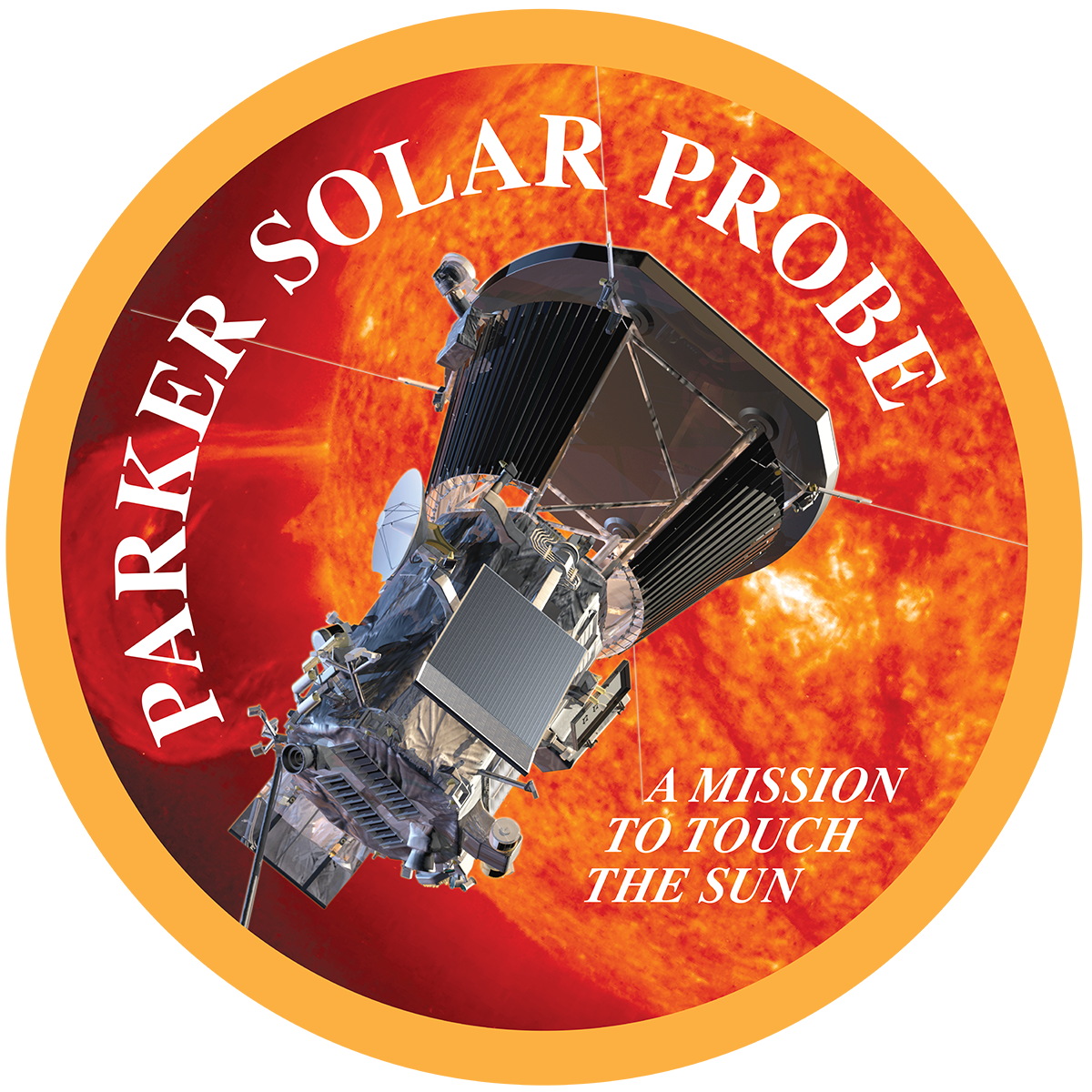
Parker Solar Probe
Touching the Sun Like Never Before
Discover how NASA's Parker Solar Probe flies closer to the Sun than any spacecraft in history to unlock the secrets of our nearest star.
Mission Snapshot
- Launch Date: August 12, 2018
- Agency: NASA
- Spacecraft: Parker Solar Probe
- Mission Goal: Fly through the Sun's outer atmosphere to learn how the Sun works.
- Status: Active
🌟 Why This Mission Matters
Parker Solar Probe is helping scientists answer questions that have puzzled people for decades. By flying closer to the Sun than any spacecraft before it, it collects information that helps us understand solar storms, protect astronauts and satellites, and learn more about the star that makes life on Earth possible.
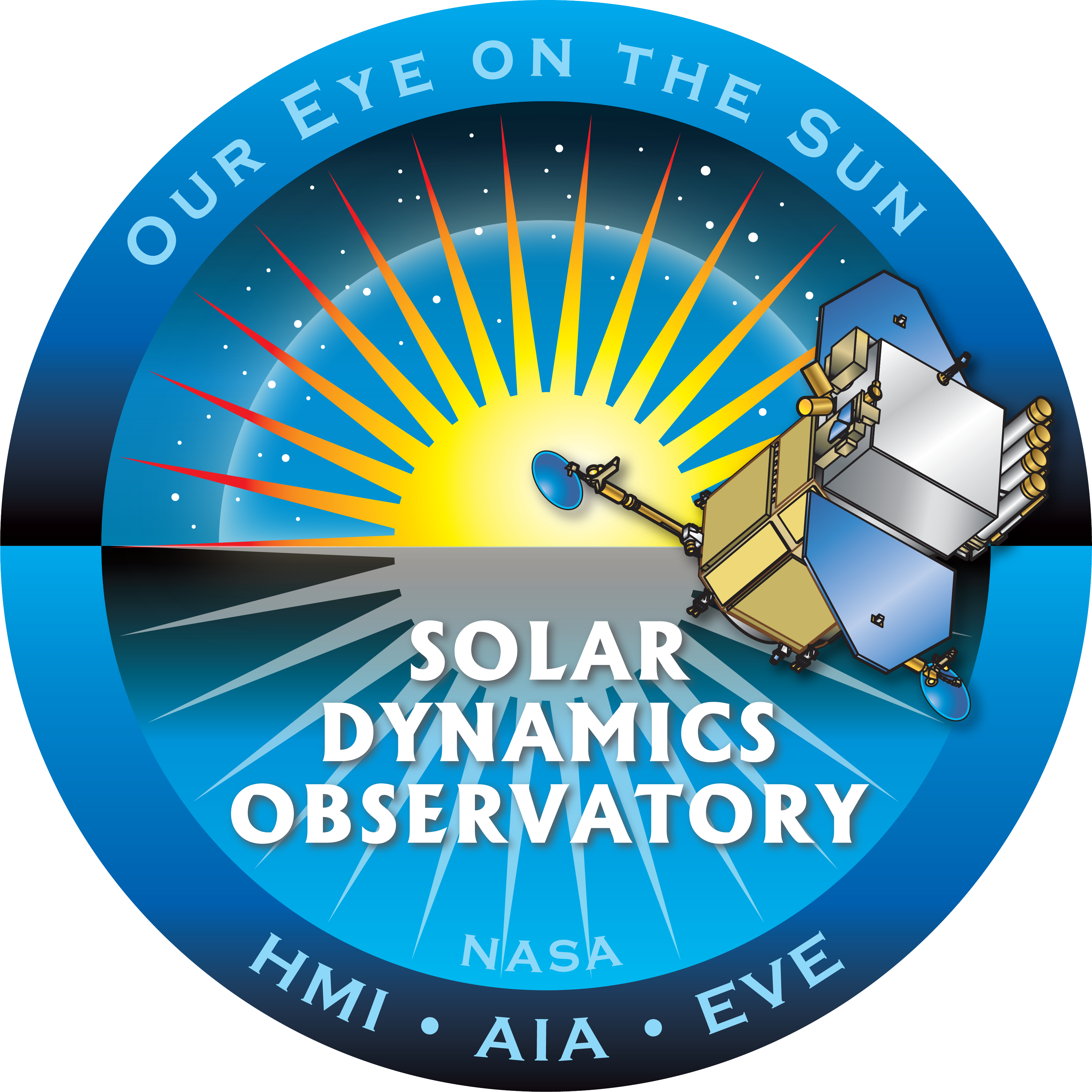
Solar Dynamics Observatory (SDO)
Watching the Sun Every Day
Discover how NASA's Solar Dynamics Observatory keeps a constant watch on our nearest star, capturing amazing images and helping scientists understand how the Sun changes over time.
Mission Snapshot
- Launch Date: February 11, 2010
-
Agency: NASA
-
Mission Goal: Observe the Sun continuously and study its activity.
-
Special Feature: Captures high-resolution images of the Sun every day.
-
Status: Active
🌟 Why This Mission Matters
The Sun is always changing. SDO helps scientists watch solar flares, sunspots, and other activity as it happens. These observations improve our understanding of the Sun and help scientists predict space weather that can affect Earth.
Beyond Our Sun
Our Star Is Just the Beginning.
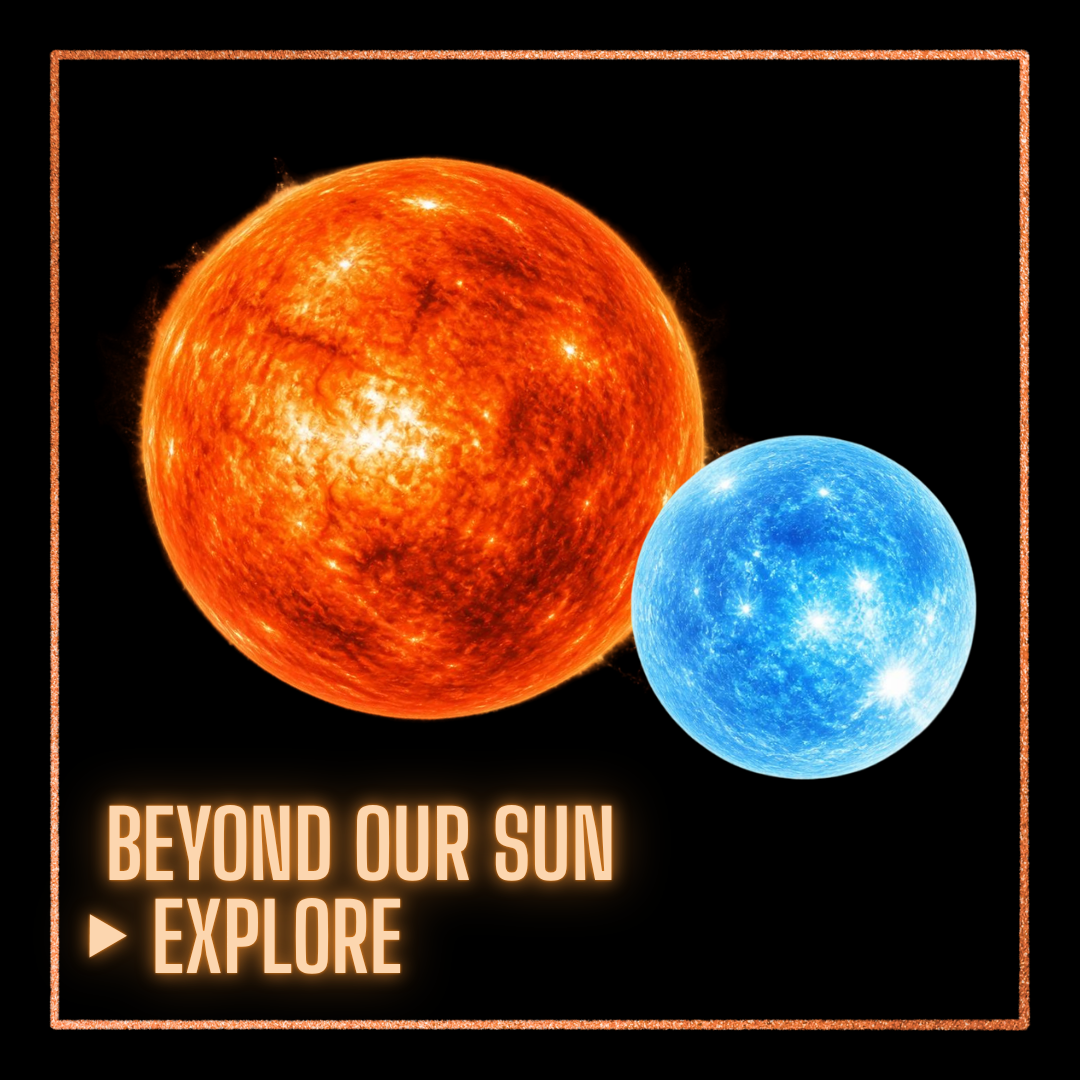
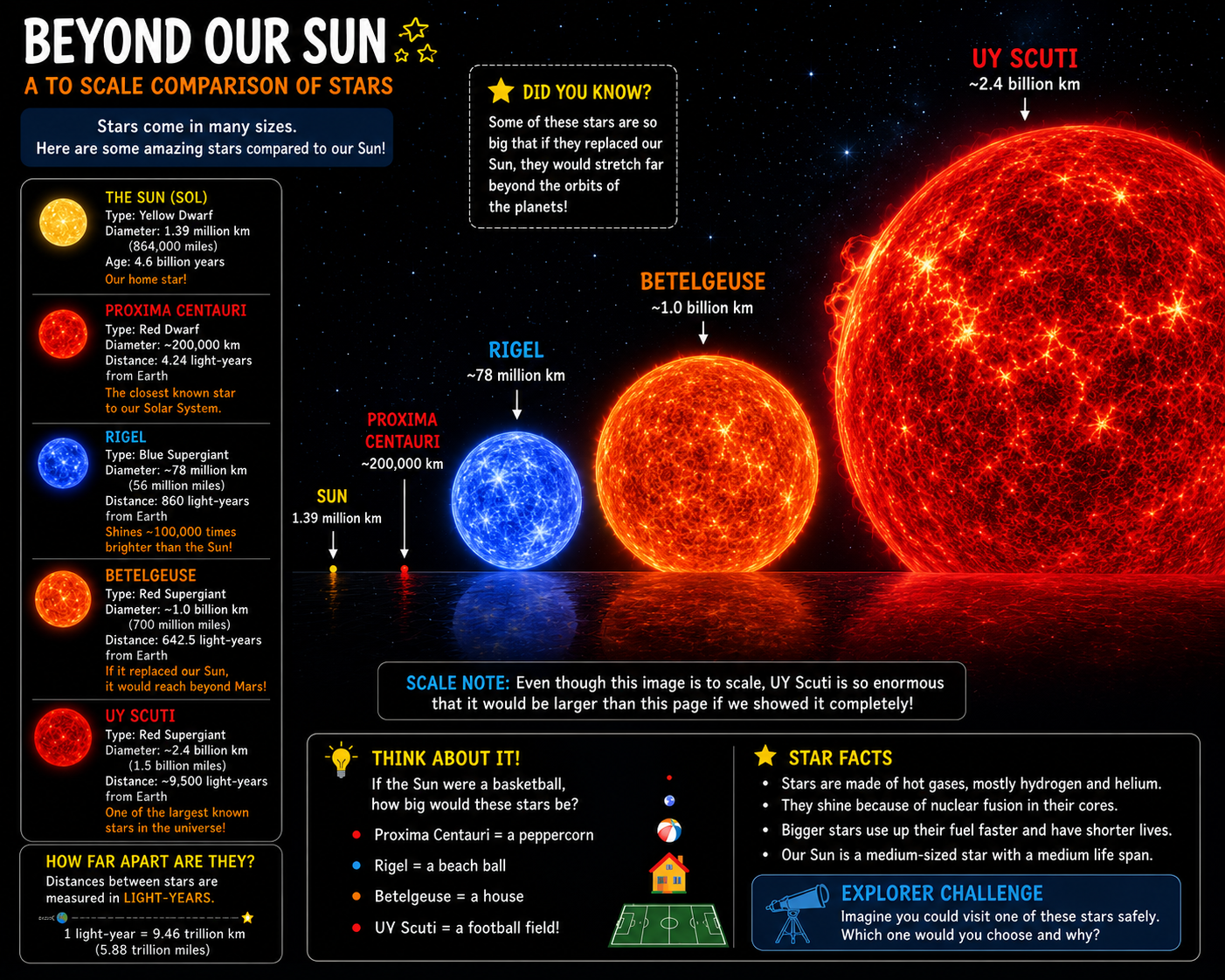
The Sun is one of billions of stars in our galaxy, and billions more exist throughout the universe. Some stars are tiny and cool, while others are so enormous they could swallow our entire Solar System. As you continue your mission, discover how our Sun compares to other incredible stars and explore the amazing variety found across space.
🌟 Why It Matters
Space Explorers don't just learn about our Sun, they discover how it fits into the much bigger universe. Comparing stars helps scientists understand how stars form, how they change, and why our Sun has been able to support life on Earth for billions of years.
🚀 Explorer Challenge
Can you discover:
- ⭐ Which star is closest to our Sun?
- 🔴 Which star is the largest?
- 🔵 Which star is the hottest?
- ☀️ What type of star is our Sun?
What makes our Sun special, even though it isn't the biggest or brightest star?
Games and More
Your Mission Continues.
You've learned about our nearest star. Now it's time to test your knowledge, complete challenges, and see if you can earn your Space Explorer badge.
🚀 Explorer Challenge
- Play the Kahoot game
- Practice Sun Vocabulary
- Get Your Misson Badge (click below for a downloadable badge)
Which fact about the Sun surprised you most?
Ready for the Full Mission?
Want to dive deeper into the Sun?
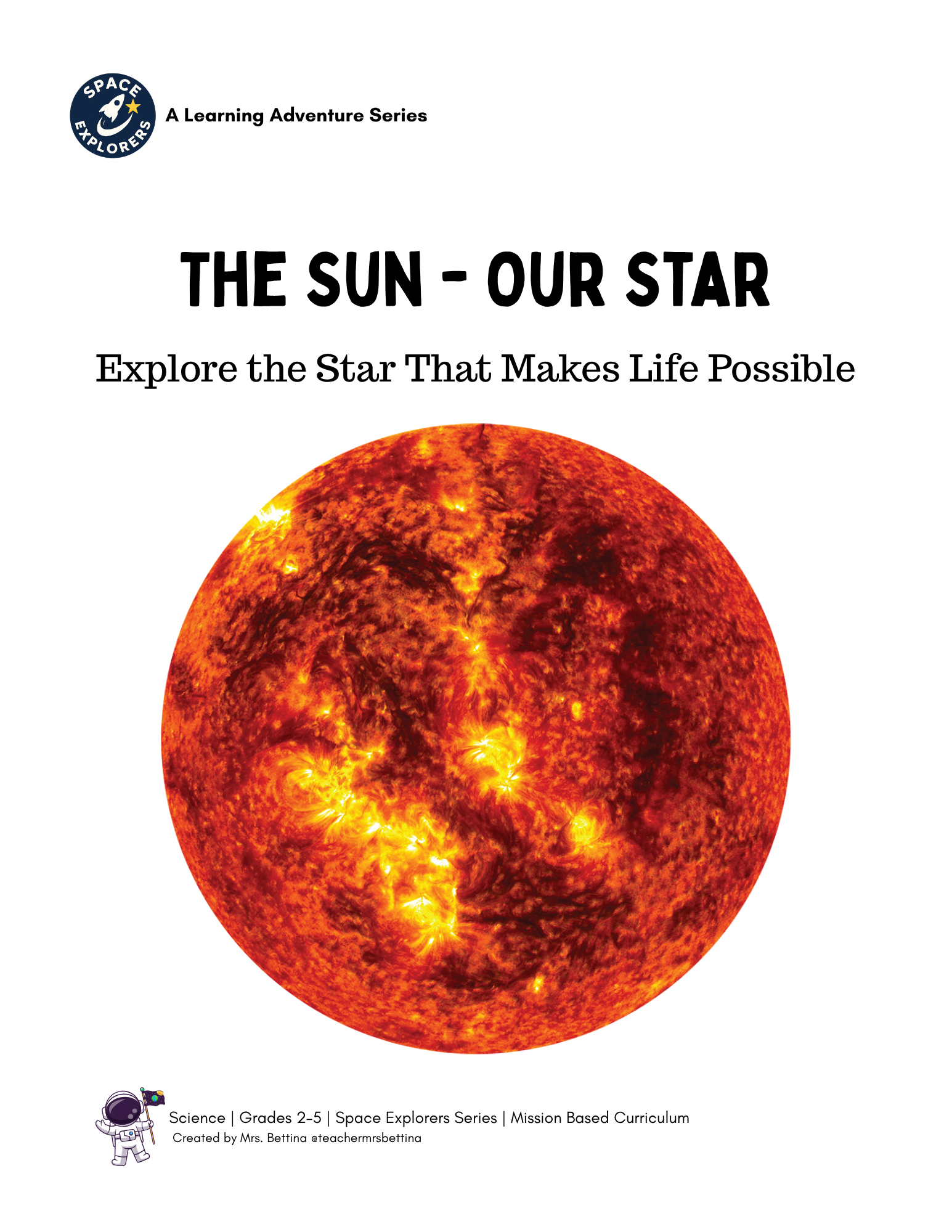
The complete Sun unit includes printable missions, STEM activities, critical thinking, Kahoots, certificates, and much more.
This standards-aligned, mission-based unit helps young explorers learn all about our closest star through engaging activities, hands-on investigation, and real-world connections.
Inside you'll find...
✔ 6 Reading Lessons
✔ Science Logs
✔ STEM Challenges
✔ Vocabulary
✔ Final Kahoot
✔ Explorer Certificate
This printable unit is the perfect way to dive deeper into the Sun and build a strong foundation in Earth and Space science. It is great for classrooms, homeschool, co-ops, and other educational settings.
Parents will appreciate the flexibility, teachers will use it year after year, and kids will enjoy learning on their mission!